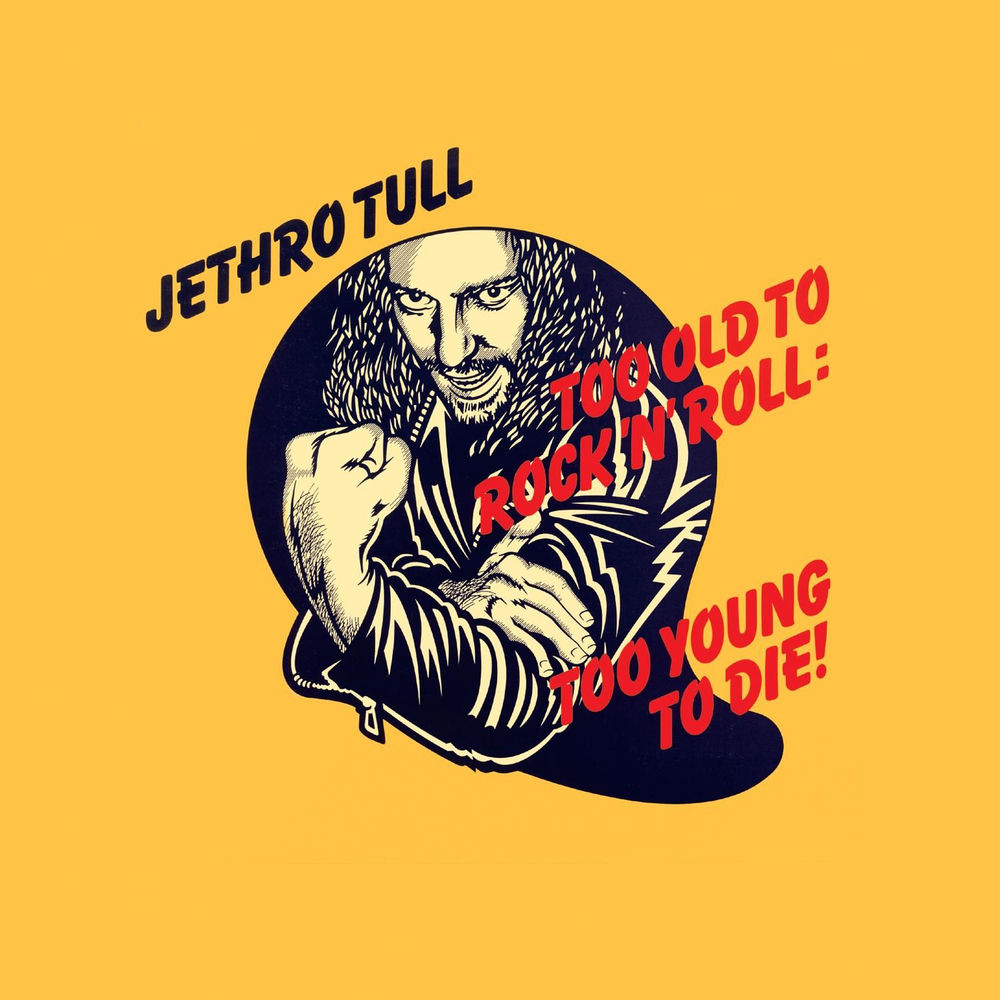
Too Old to Rock 'n' Roll: Too Young to Die! (2002 Remaster)
- Released14 October 2002
- UK peak No. 25
- Weeks on UK chart 10
- Entered UK chart 9 May 1976
- LabelParlophone UK
- Tracks12 · 49 min
Tracks
| 1 | Quizz Kid (2002 Remaster) | 5:07 | |
| 2 | Crazed Institution (2002 Remaster) | 4:45 | |
| 3 | Salamander (2002 Remaster) | 2:51 | |
| 4 | Taxi Grab (2002 Remaster) | 3:52 | |
| 5 | From a Dead Beat to An Old Greaser (2002 Remaster) | 4:06 | |
| 6 | Bad-Eyed and Loveless (2002 Remaster) | 2:12 | |
| 7 | Big Dipper (2002 Remaster) | 3:34 | |
| 8 | Too Old to Rock 'n' Roll: Too Young to Die! (2002 Remaster) | 5:40 | |
| 9 | Pied Piper (2002 Remaster) | 4:31 | |
| 10 | The Chequered Flag (Dead or Alive) (2002 Remaster) | 5:24 | |
| 11 | A Small Cigar (2002 Remaster) | 3:38 | |
| 12 | Strip Cartoon (2002 Remaster) | 3:17 |
About the album
Too Old to Rock 'n' Roll: Too Young to Die! is the ninth studio album released by British band Jethro Tull, recorded between November 1975 and January 1976 and released in April 1976. It is the first album to include bassist John Glascock who also contributed backing vocals. Too Old to Rock 'n' Roll: Too Young to Die! is a concept album, which follows the story of Ray Lomas, an aging rocker who finds fame with the changes of musical trends. It was Jethro Tull's only album of the 1970s not to achieve Gold certification.
Recording
Like their previous album, Minstrel in the Gallery, the band recorded the album in the Maison Rouge Mobile Studio. They recorded "Too Old to Rock 'n' Roll: Too Young to Die" and "The Chequered Flag (Dead or Alive)" along with the outtakes "Salamander's Rag Time", "Commercial Traveller" and "Advertising Man (Unfinished backing track)" on 19 and 20 November 1975, "Big Dipper" on 3 January 1976, "Pied Piper" and "Quizz Kid" on 4 and 5 January, "Taxi Grab", "Pied Piper", "Crazed Institution" and "Old Rocker (Quizz Kid intro)" on 8 January, "From a Dead Beat to an Old Greaser", "Salamander" and "Pied Piper" along with the outtake "A Small Cigar (acoustic version)" on 12 January, and finally "Bad-Eyed and Loveless" along with the outtake "A Small Cigar (orchestral version)" on 27 January 1976.
Background
Anderson explained the concept came from the turmoil of the rise of the punk movement, and was not meant to be autobiographical of him as an aging songwriter, although "some members of the press took the album as our attempt to 'get with' the punks". Anderson also stated that the basis of the concept is "to point out that this business [music, fashion] is cyclic, and that if you stick around long enough, you do come into fashion again."
Concept
Originally intended to be a rock musical, the story would follow an aging and retired rock star named Ray Lomas - winning money in a 'Quizz' show, trying to commit suicide and waking up years later to find out that the grease fashion has returned. Although much of the album concept is only explained in the cartoons printed in the sleeves, there are changes in the plot or in details between the cartoons and the music.
A clip of the title track was released in the Slipstream video, which returned to much of the original album's concept.
Critical reception
Rolling Stone complained about the "muddled story" of the album, saying that "Ian Anderson should stick to music, because he most definitely is not a storyteller." Nevertheless, the same review praised Anderson's skill at musical composition, and the guitar solos of Martin Barre.
Chris Welch, writing for Melody Maker, gave a mixed review, saying that he "long(ed) for the beat of Barriemore Barlow to break free, or the guitar of Martin Barre to swoop", at the same time he praised Anderson's poetics.
AllMusic's review called the album "one of the minor efforts in the [Jethro Tull] catalogue".