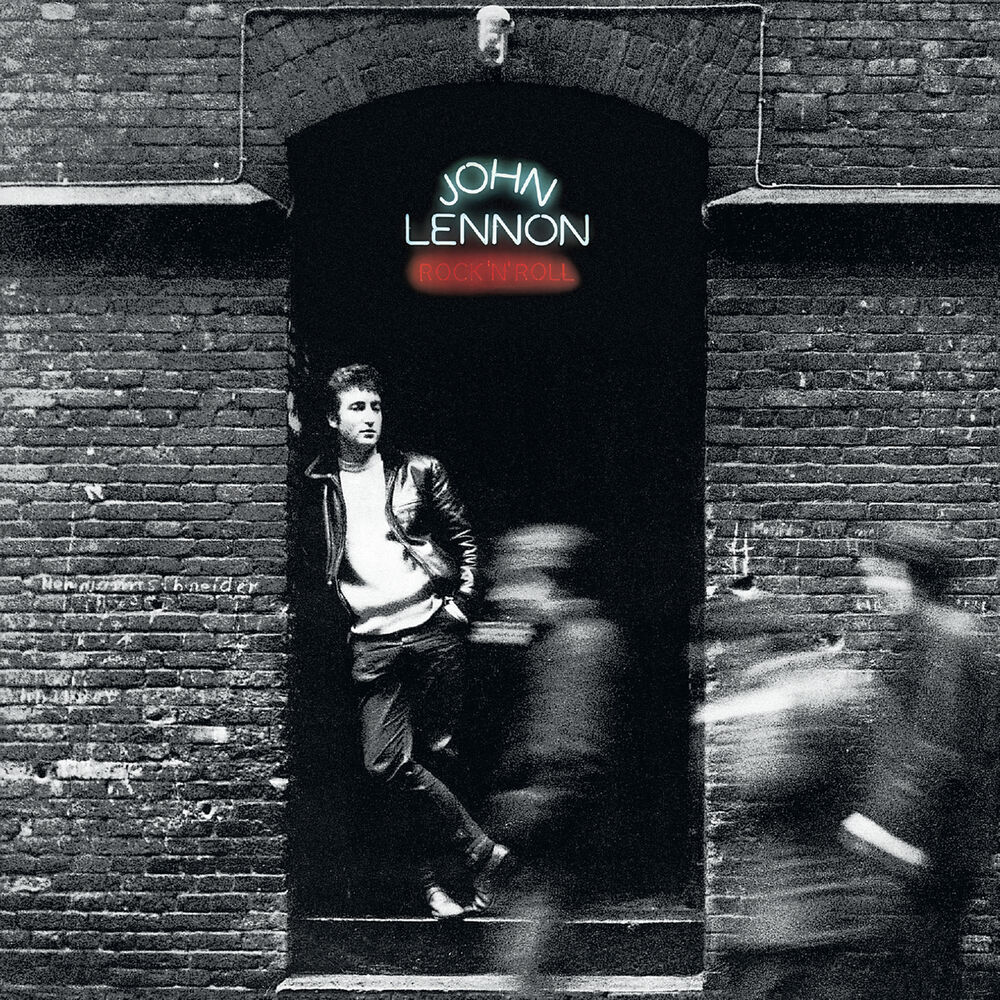
Rock 'N' Roll
- Released1 October 2010
- UK peak No. 6
- Weeks on UK chart 28
- Entered UK chart 2 March 1975
- LabelEMI Catalogue
- Tracks13 · 39 min
One track from it charted as a single. Press a flag to play it in the chart where it peaked.
Tracks
| 1 | Be-Bop-A-Lula (Remastered 2010) | 2:36 | |
| 2 | 3:28 | ||
| 3 | Rip It Up / Ready Teddy (Remastered 2010) | 1:32 | |
| 4 | You Can't Catch Me (Remastered 2010) | 4:51 | |
| 5 | Ain't That A Shame (Remastered 2010) | 2:30 | |
| 6 | Do You Want To Dance (Remastered 2010) | 2:52 | |
| 7 | Sweet Little Sixteen (Remastered 2010) | 2:59 | |
| 8 | Slippin' And Slidin' (Remastered 2010) | 2:16 | |
| 9 | Peggy Sue (Remastered 2010) | 2:03 | |
| 10 | Bring It On Home To Me / Send Me Some Lovin' (Remastered 2010) | 3:41 | |
| 11 | Bony Moronie (Remastered 2010) | 3:46 | |
| 12 | Ya Ya (Remastered 2010) | 2:17 | |
| 13 | Just Because (Remastered 2010) | 4:25 |
About the album
Rock 'n' Roll is the fifth and final solo album by the English musician John Lennon. Released in February 1975, it is a covers album of rock and roll songs from the late 1950s and early 1960s.
Recording the album was troubled and spanned an entire year: Phil Spector produced sessions in October 1973 at A&M Studios, and Lennon produced sessions in October 1974 at the Record Plant. Lennon was being sued by Morris Levy over copyright infringement over one line in his Beatles song "Come Together". As part of an agreement, Lennon had to include three Levy-owned songs on Rock 'n' Roll. Spector disappeared with the session recordings and was subsequently involved in a motor accident, leaving the album's tracks unrecoverable until the beginning of the Walls and Bridges sessions. With Walls and Bridges coming out first, featuring one Levy-owned song, Levy sued Lennon expecting to see Lennon's Rock 'n' Roll album.
The album reached number 6 in both the United Kingdom and the United States, later being certified Gold in both countries. It was supported by the single "Stand by Me", which peaked at number 20 in the US, and 30 in the UK. The cover photo was taken by Jürgen Vollmer during the Beatles' stay in Hamburg.
Background
Lennon wrote the song "Come Together" for the Beatles' 1969 album Abbey Road. Inspired by the Chuck Berry tune "You Can't Catch Me", it bore a melodic resemblance to the original—and Lennon took the third line of the second verse ("Here come [old] flat-top") for the new lyric. Publisher Morris Levy, who held "You Can't Catch Me"'s copyright, brought a lawsuit for infringement, and the case was due to be heard in a New York court in December 1973. It was later settled out of court, with the agreement that, according to an announcement by Levy, Lennon had to "record three songs by Big Seven publishers on his next album. The songs [he] intends to record at this time are "You Can't Catch Me", "Angel Baby" and "Ya Ya"." Lennon had the right to change the last two songs to any other songs that were published by Big Seven. The settlement also specified that he was to offer licensing rights to any three of seven specified non-Beatle songs owned by Apple Music.
In the meantime, Lennon had separated from Yoko Ono and was living in Los Angeles with his personal assistant, May Pang.
Recording
Lennon initially teamed up with producer Phil Spector to record the album, letting Spector have full control. Spector chose some of the songs, and booked the studio and the musicians. When news got around that Lennon was in Hollywood making a record, many musicians working in the city wanted to be involved. In mid-October 1973, sessions were booked at A&M Studios, with many of them having over 30 musicians, but the sessions quickly fell into disarray—fueled by alcohol. Spector once showed up dressed in a surgeon's outfit and shot a gun in the ceiling of the studio to demonstrate that he would not put up with arguments, hurting Lennon's ears. On another occasion, a bottle of whiskey had spilled on the A&M Studio's mixing console causing future sessions to be banned from the facility. Unknown to Lennon, each night Spector would remove the master tapes from the studio, and move them to his house.
Spector then disappeared with the session tapes and would not be heard from for several months.
Reception and aftermath
The album was released on 17 February 1975 in the US, and a few days later in the UK, on 21 February 1975. It reached number 6 in both the United Kingdom and the United States. On 10 March and 18 April 1975, in the US and UK respectively, "Stand by Me" was released as a single, backed with "Move Over Ms. L", a song that was meant to appear on Walls and Bridges but was cut from the final line-up. "Stand by Me" peaked at number 20 in the US and number 30 in the UK. Lennon promoted the song by appearing on the BBC TV show Old Grey Whistle Test, which also featured an interview by Bob Harris. The show had Lennon singing live over the backing tracks of "Stand by Me" and "Slippin' and Slidin'". Lennon also appeared on Salute to Sir Lew – The Master Showman singing live again over backing tracks, this time for three songs: "Stand by Me", "Slippin' and Slidin'" and "Imagine". A second single, "Slippin N Slidin"/"Ain't That a Shame", was announced, and promotional copies pressed, but it was not released.
Reissues
"Stand by Me" was reissued in the US, backed with "Woman Is the Nigger of the World", on 4 April 1977. Rock 'n' Roll re-charted in the UK on 17 January 1981, at number 64. In the US, it was reissued in October 1980, also at budget price, and it was briefly reissued in the UK by the budget label Music for Pleasure with an alternative cover on 25 November 1981. After Lennon's death, the album, along with seven other Lennon albums, was reissued by EMI as part of a box set, which was released in the UK on 15 June 1981. In 1981, Belgium and France issued the album, along with the Beatles' Rock 'n' Roll Music, as part of a box set.
The album was first issued on CD on 26 May 1987. In 1988, it was reissued in Australia with an alternative cover and under the title Rip It Up. In 2004, Yoko Ono supervised the remixing of Rock 'n' Roll for its reissue, including four bonus tracks from the ill-fated Spector sessions. These leftovers from the sessions had already appeared, as part of 1986's Menlove Ave. (a collection of outtakes) or the John Lennon Anthology box set.