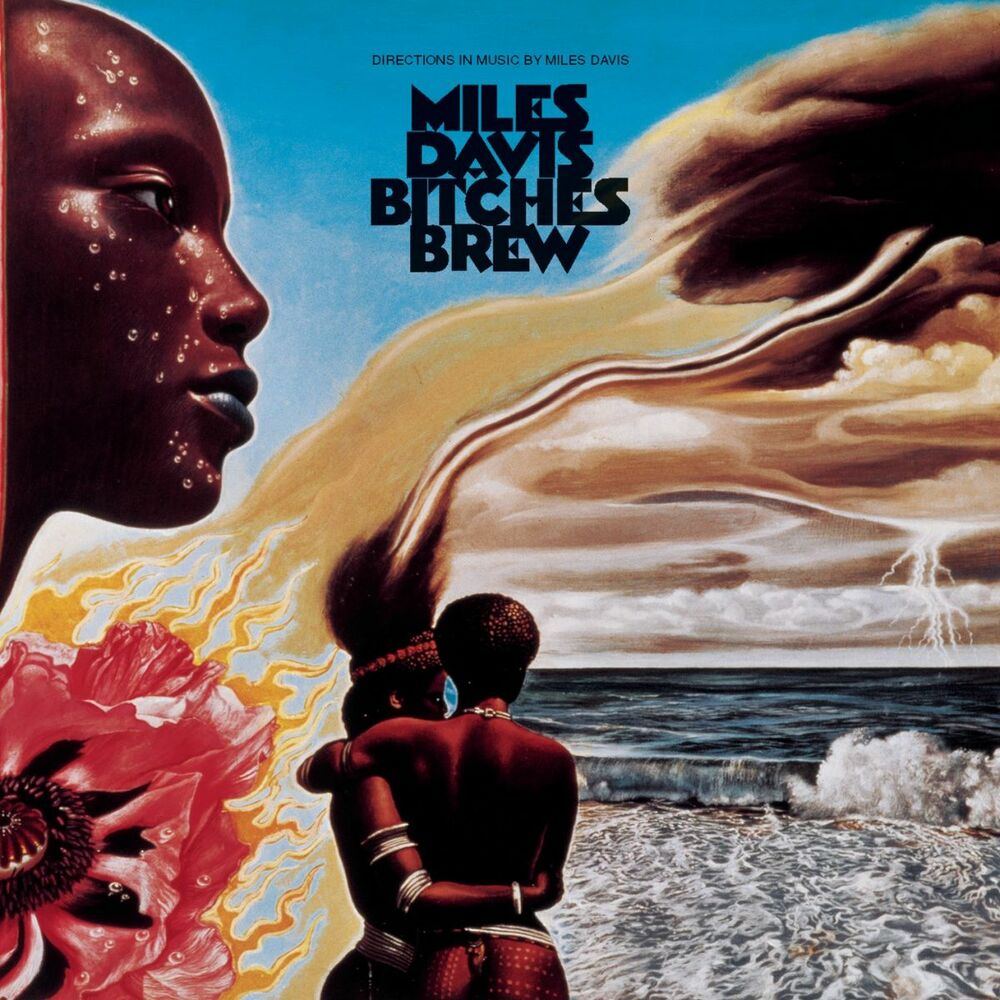
Bitches Brew
- Released25 May 1992
- UK peak No. 71
- Weeks on UK chart 1
- Entered UK chart 5 July 1970
- LabelColumbia/Legacy
- Tracks7 · 106 min
Tracks
| 1 | Pharaoh's Dance | 20:05 | |
| 2 | Bitches Brew (feat. Wayne Shorter, Bennie Maupin, John McLaughlin, Chick Corea, Joe Zawinul, Dave Holland & Harvey Brooks) | 26:58 | |
| 3 | Spanish Key (feat. Wayne Shorter, Bennie Maupin, John McLaughlin, Chick Corea, Joe Zawinul, Dave Holland & Harvey Brooks) | 17:32 | |
| 4 | John McLaughlin (feat. Wayne Shorter, Bennie Maupin, John McLaughlin, Chick Corea, Joe Zawinul, Dave Holland & Harvey Brooks) | 4:22 | |
| 5 | Miles Runs the Voodoo Down (feat. Wayne Shorter, Bennie Maupin, John McLaughlin, Chick Corea, Joe Zawinul, Dave Holland & Harvey B | 14:02 | |
| 6 | Sanctuary (feat. Wayne Shorter, Bennie Maupin, John McLaughlin, Chick Corea, Joe Zawinul, Dave Holland & Harvey Brooks) | 10:57 | |
| 7 | Feio (feat. Wayne Shorter, John McLaughlin, Chick Corea, Joe Zawinul & Dave Holland) | 11:49 |
About the album
Bitches Brew is a studio album by the American jazz trumpeter, composer, and bandleader Miles Davis. It was recorded from August 19 to 21, 1969, at Columbia's Studio B in New York City and released on March 30, 1970, by Columbia Records. It marked Davis's continuing experimentation with electric instruments that he had featured on his previous record, the critically acclaimed In a Silent Way (1969). With these instruments, such as the electric piano and guitar, Davis departed from traditional jazz rhythms in favor of loose, rock-influenced arrangements based on improvisation. The final tracks were edited and pieced together by producer Teo Macero.
The album initially received a mixed critical and commercial response, but it gained momentum and became Davis's highest-charting album on the U.S. Billboard 200, peaking at No. 35. In 1971, it won the Grammy Award for Best Large Jazz Ensemble Album. In 1976, it became Davis's first album to be certified Gold by the Recording Industry Association of America (RIAA).
In subsequent years, Bitches Brew gained recognition as one of jazz's greatest albums and a progenitor of the jazz rock genre, as well as a major influence on rock and '70s crossover musicians. In 1998, Columbia released The Complete Bitches Brew Sessions, a four-disc box set that includes the original album and previously unreleased material.
Background and recording
By 1969, Davis's core working band consisted of Wayne Shorter on soprano saxophone, Dave Holland on bass, Chick Corea on electric piano, and Jack DeJohnette on drums. The group, minus DeJohnette, recorded In a Silent Way (1969), which also featured Joe Zawinul, John McLaughlin, Tony Williams, and Herbie Hancock. The album marked the beginning of Davis's "electric period", incorporating instruments such as the electric piano, guitar, and jazz fusion styles. For his next studio album, Davis wished to explore his electronic and fusion style even further. While touring with his five-piece from the spring to August 1969, he introduced new pieces for his band to play, including early versions of what became "Miles Runs the Voodoo Down", "Sanctuary", and "Spanish Key". At this point in his career Davis was influenced by contemporary rock and funk music, Zawinul's playing with Cannonball Adderley, and the work of English composer Paul Buckmaster.
In August 1969, Davis gathered his band for a rehearsal, one week prior to the booked recording sessions.
Release
Bitches Brew was released in March 1970. It gained commercial momentum for the next four months and peaked at No. 35 on the U.S. Billboard 200 for the week of July 4, 1970. This remains Davis's second best performance on the chart behind Kind of Blue, which has peaked at number 3 on Vinyl and number 12 in 2020. On September 22, 2003, the album was certified platinum by the RIAA for selling one million copies in the U.S.
In addition to the standard stereo version, the album was also mixed for quadraphonic sound. Columbia released a quad LP version, using the SQ matrix system, in 1971. Sony reissued the album in Japan in 2018 on the Super Audio CD format containing both the complete stereo and quadraphonic mixes.
Reception and legacy
Reviewing for Rolling Stone in 1970, Langdon Winner said Bitches Brew shows Davis's music expanding in "beauty, subtlety and sheer magnificence", finding it "so rich in its form and substance that it permits and even encourages soaring flights of imagination by anyone who listens". He concluded that the album would "reward in direct proportion to the depth of your own involvement". Village Voice critic Robert Christgau deemed it "good music that's very much like jazz and something like rock", naming it the year's best jazz album and Davis "jazzman of the year" in his ballot for Jazz & Pop magazine. Years later, he had lost some enthusiasm about the album; in Christgau's Record Guide: Rock Albums of the Seventies (1981), he called Bitches Brew "a brilliant wash of ideas, so many ideas that it leaves an unfocused impression", with Tony Williams' steadier rock rhythms from In a Silent Way replaced by "subtle shades of Latin and funk polyrhythm that never gather the requisite fervor".
Production
Teo Macero – producer
Frank Laico – engineer (August 19, 1969 session)
Stan Tonkel – engineer (all other sessions)
Mark Wilder – mastering
Mati Klarwein – cover painting
Bob Belden – reissue producer
Michael Cuscuna – reissue producer