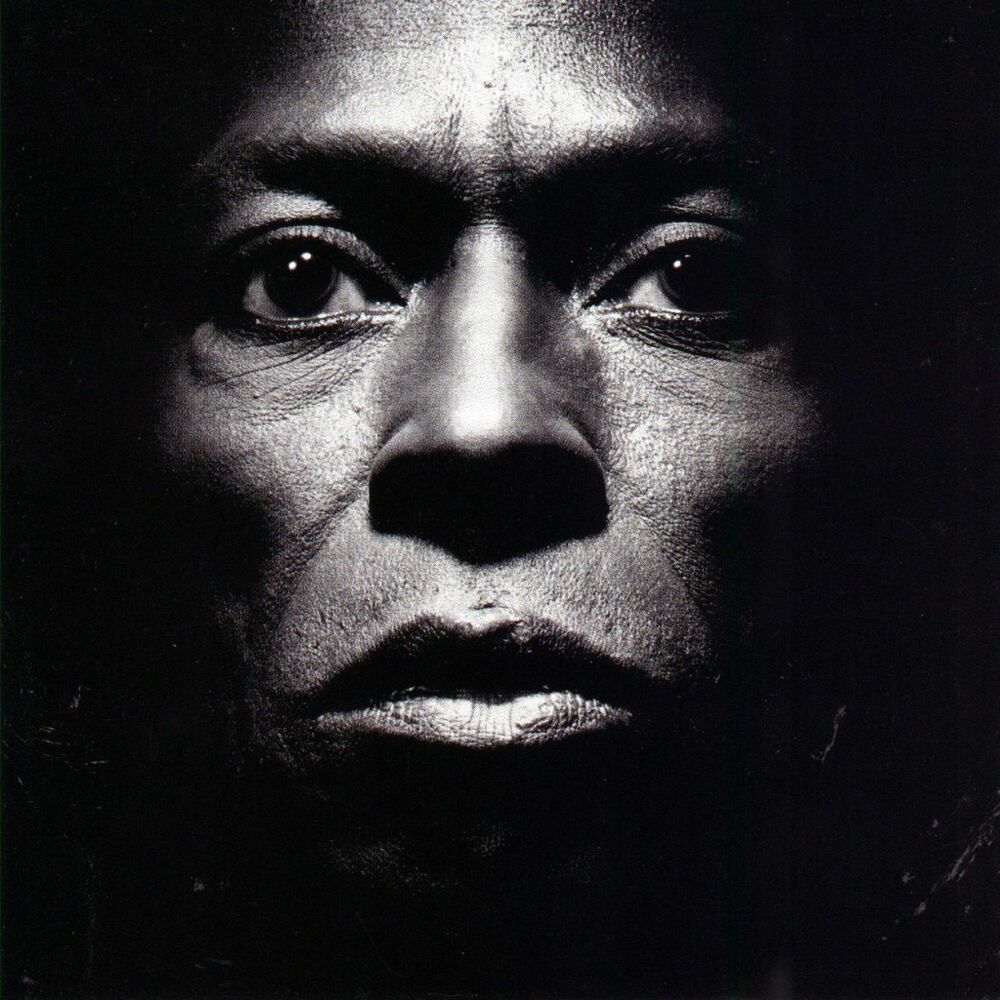
Tutu
- Released1 September 1986
- UK peak No. 74
- Weeks on UK chart 2
- Entered UK chart 12 October 1986
- Label143/Warner Records
- Tracks8 · 42 min
Tracks
| 1 | Tutu | 5:16 | |
| 2 | Tomaas | 5:35 | |
| 3 | Portia | 6:20 | |
| 4 | Splatch | 4:43 | |
| 5 | Backyard Ritual | 4:49 | |
| 6 | Perfect Way | 4:34 | |
| 7 | Don't Lose Your Mind | 5:49 | |
| 8 | Full Nelson | 5:07 |
About the album
Tutu is a studio album by American jazz trumpeter, composer and bandleader Miles Davis, released on September 29, 1986, by Warner Bros. Records. The album is Miles Davis' tribute to Archbishop Desmond Tutu who was a human rights and anti-apartheid activist. It was recorded primarily at Capitol Studios in Los Angeles and Clinton Recording in New York, except the song "Backyard Ritual", which was recorded at Le Gonks in West Hollywood. Davis received the 1986 Best Jazz Instrumental Performance, Soloist Grammy Award for his performance on the album.
Background
Some tracks were originally planned as a collaboration with Prince. Prince later pulled out for undisclosed reasons, although the two remained firm friends and later collaborated on "Can I Play With U" as well. (Davis later covered "Movie Star" and "Penetration" by Prince.) Davis ultimately worked with bassist/multi-instrumentalist Marcus Miller. Miller wrote and arranged all the songs, except "Tomaas" (co-written by Davis), "Backyard Ritual" (by keyboardist George Duke), and "Perfect Way" (by pop group Scritti Politti). The music is strongly inspired by mid-1980s R&B and funk, with heavy use of synthesizers, sequencers and drum machines. Miller performed the bulk of instrumentation on the album, including bass guitar, synthesizers and drum machines, bass clarinet and soprano saxophone.
As indicated in the notes accompanying the album, Tutu was produced by Tommy LiPuma and Marcus Miller, with the exception of "Backyard Ritual", which was co-produced by Duke and LiPuma.
The cover was designed by Eiko Ishioka and photographed by Irving Penn.
Reception and legacy
Tutu divided critics and listeners when it was released in 1986. Like Davis's pivotal 1970 album Bitches Brew, Paul Tingen wrote, Tutu became one of the "defining jazz albums" of its decade and attracted a young, new audience while alienating many other jazz listeners because of its heavy reliance on the drum machine and synthesizers. A number of critics felt the music was ingratiatingly elegant, designed for casual listening, and largely a work by Miller. In The New York Times that year, Robert Palmer said it "already sounds curiously dated" and unambitious, featuring synthesizers that "have glutinous textures so overly familiar from the mainstream of late-1970s pop jazz" and electronic rhythms lacking the innovation of contemporary hip hop records.
Others believed the album gave a musical setting for Davis's improvisations to thrive in, comparable to his orchestral recordings with Gil Evans from the late 1950s and early 1960s. The Village Voice critic Robert Christgau deemed it a marginal success but also Davis's "best in a decade".
Production
Tommy LiPuma – executive producer, producer
Marcus Miller – producer (exc. 5)
Eric Calvi – recording engineer (exc. 5), mixing (2, 6–8)
Peter Doell – recording engineer (exc. 5)
Bill Schnee – mixing (1, 3–4)
Maureen Thompson – assistant engineer (1, 3–4)
Eddie Garcia – assistant engineer (2, 6–8)
George Duke – producer (5)
Erik Zobler – recording and mixing engineer (5)
Doug Sax – mastering at The Mastering Lab (Hollywood)
Larry Fishman – production assistant
Eiko Ishioka – art direction
Susan Welt – design
Irving Penn – photography