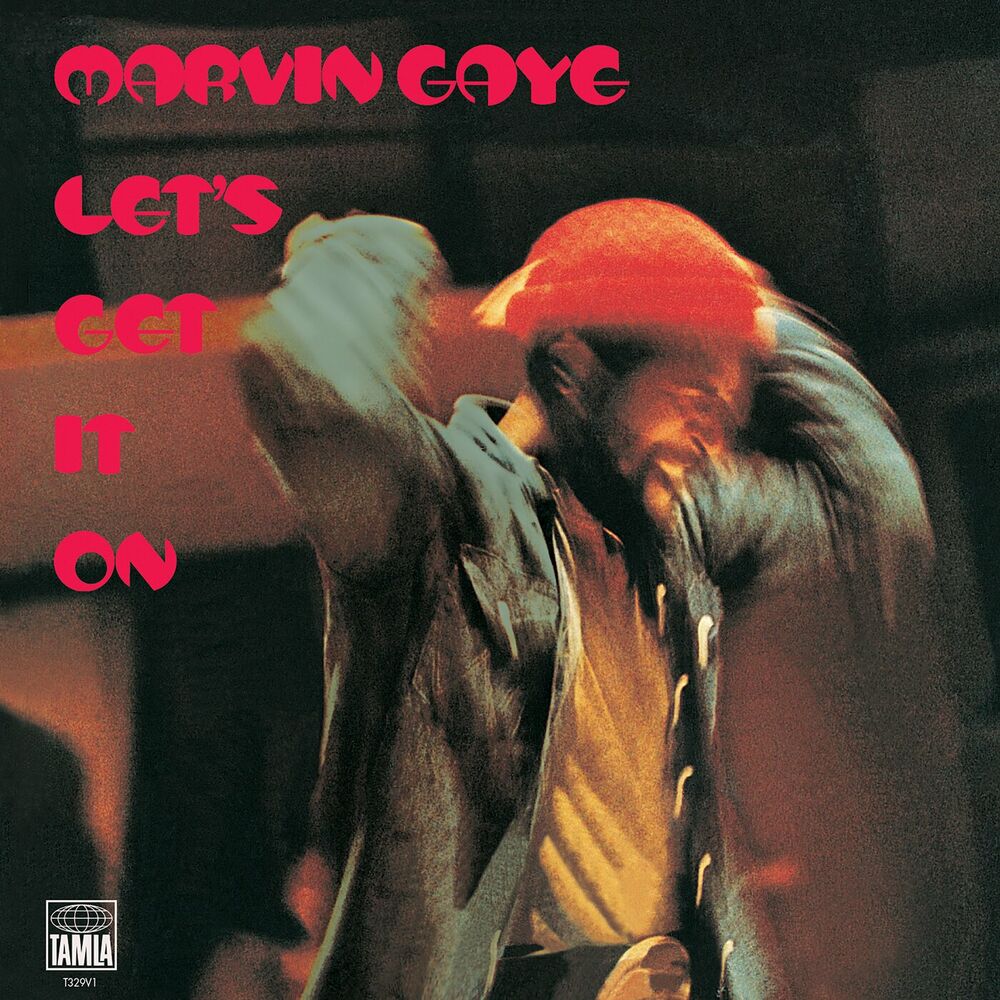
Let's Get It On
- Released3 April 2008
- UK peak No. 39
- Weeks on UK chart 1
- Entered UK chart 4 November 1973
- LabelMotown
- Tracks8 · 32 min
4 tracks from it charted as singles. Press a flag to play it in the chart where it peaked.
Tracks
| 1 | 4:53 | ||
| 2 | Please Don’t Stay (Once You Go Away) | 3:27 | |
| 3 | If I Should Die Tonight | 4:01 | |
| 4 | Keep Gettin' It On | 3:13 | |
| 5 | Come Get To This No. 21 · 1973 | 2:41 | |
| 6 | Distant Lover No. 28 · 1974 | 4:16 | |
| 7 | You Sure Love To Ball No. 50 · 1974 | 4:46 | |
| 8 | Just To Keep You Satisfied | 4:27 |
About the album
Let's Get It On is the twelfth studio album by the American soul singer and songwriter Marvin Gaye. It was released on August 28, 1973, by the Motown subsidiary label Tamla Records on LP.
Recording sessions for the album took place during June 1970 to July 1973 at Hitsville U.S.A. and Golden World Studio in Detroit, and at Hitsville West in Los Angeles. Serving as Gaye's first venture into the funk genre, Let's Get It On also incorporates smooth soul and doo-wop styles alongside sexually suggestive lyrics, leading to one writer's description of it as "one of the most sexually charged albums ever recorded". Gaye infused ideas of spiritual healing in songs about sex and romance, in part as a way of coping with childhood abuses from his father Marvin Gay Sr., which had stunted his sexuality.
Following the breakthrough success of his socially conscious album What's Going On (1971), Let's Get It On helped establish Gaye as a sex icon and broadened his mainstream appeal. It produced three singles—the title track, "Come Get to This", and "You Sure Love to Ball"—that achieved Billboard chart success. Let's Get It On became the most commercially successful album of Gaye's career at Motown, resulting in more creative control being given to him by the label.
Background
In the spring of 1972, Marvin Gaye was suffering from writer's block. Following the release of his most commercially successful album up to that point, What's Going On (1971), and the soundtrack album to the blaxploitation film Trouble Man (1972), Gaye had struggled to come up with new material after Motown Records had renegotiated a new contract with him. The contract provided him with more creative control over his recordings. The deal was worth $1 million, making him the highest-earning soul artist, as well as the highest-earning black artist, at the time. He was also struggling with deciding whether or not to relocate to Los Angeles, following Motown-CEO Berry Gordy's move of the record label and replacement of the Detroit-based Hitsville U.S.A. (Motown Studio A) recording studio with the Hitsville West studio in Los Angeles. Amid relocation and his lack of material, Gaye was struggling with his conscience, as well as dealing with expectations from his wife, Gordy's sister Anna. Gaye's separation from Gordy pressured him emotionally.
Recording
Gaye proceeded to record some more politically conscious material at the Golden World Records studio, known as Motown's Studio B, as well as the preliminary vocals and instrumentation for some of the material to be featured on Let's Get It On. Following the earlier sessions in Detroit at Golden World, Gaye recorded at Hitsville West in Los Angeles from February to July 1973. Accompanied by an experienced group of session musicians called The Funk Brothers, who had contributed to Gaye's What's Going On, and received their first official credit, Gaye recorded the unreleased songs "The World is Rated X" and "Where Are We Going?" and the single "You're the Man" (1972) at Golden World. "Where Are We Going?" was later covered by trumpeter Donald Byrd. Gaye had planned the release of an album titled You're the Man, but it was later shelved for unknown reasons.
Music and lyrics
"Let's Get It On" features soulful, passionate lead vocals and multi-tracked background singing, both by Gaye. It has a 1950s-styled melody and begins with three wah-wah guitar notes and centers on simple chord changes, while its arrangements are centered on an eccentric rhythm pattern. Its signature guitar line is played by session musician Don Peake. Music journalist Jon Landau dubs the song "a classic Motown single, endlessly repeatable and always enjoyable". The song is reprised on the fourth track, "Keep Gettin' It On". It expands on the title track's sensual theme with political overtones: "won't you rather make love, children / as opposed to war, like you know you should."
The third track, the ballad "If I Should Die Tonight" originally appeared on the vinyl LP in a shortened version lasting only 3:03. For the 1986 'twofer' (with "What's Going On") CD reissue of the album, Motown recording engineers for the first time restored the missing verse which had been omitted from the LP.
Marketing and sales
Released on August 28, 1973, Let's Get It On surpassed Gaye's previous studio effort, What's Going On, as the best-selling record of his tenure with Motown. The album peaked at number two on the US Billboard Top LPs chart, behind The Rolling Stones's Goats Head Soup (1973), while it also managed to reach number one in Cash Box for one week, as well as two weeks at the top of Record World's music charts. Let's Get It On charted for 61 weeks on the Billboard charts, and remained at the top of the Billboard Soul Albums for 11 weeks, becoming the best-selling soul album of 1973.
Two of the album's singles reached the top 40 of the Billboard Hot 100, including "Let's Get It On", which became Gaye's second number-one US single, and the top-30 hit "Come Get to This", which peaked at number 23 on the chart.
Critical reception
Let's Get It On received positive reviews from music critics. Billboard called it "fine in terms of vocal attack and material [...] touches on the excellent in terms of instrumental support", while citing the title track and "Distant Lover" as the album's best recordings. Jon Landau of Rolling Stone found Gaye's performance on-par with that of What's Going On and wrote that "he continues to transmit that same degree of intensity, sending out near cosmic overtones while eloquently phrasing the sometimes simplistic lyrics". Although he viewed that it "lacks that album's series of highpoints", Landau commented that "it ebbs and flows, occasionally threatening to spend itself on an insufficiency of ideas, but always retrieved, just in time, by Gaye's performance. From first note to last, he keeps pushing and shoving, and if he sometimes takes one step back for every two ahead, he gets there just the same — and with style and spirit to spare".
Accolades
Much like What's Going On, Let's Get It On has been included in professional lists of the best albums. It was ranked number 58 on The Times's 1993 publication of the 100 Best Albums of All Time. Blender magazine ranked the album number 15 on its list of the 100 Greatest American Albums of All Time. In 2003, it was ranked number 165 on Rolling Stone's 500 Greatest Albums of All Time publication; the 2023 edition of the list ranked it 422nd. Also in 2003, Let's Get It On was reissued by Universal Music; the re-release was later given a silver certification by the British Phonographic Industry. In 2004, Let's Get It On was inducted into the Grammy Hall of Fame and cited by The Recording Academy as a recording of "historical significance".