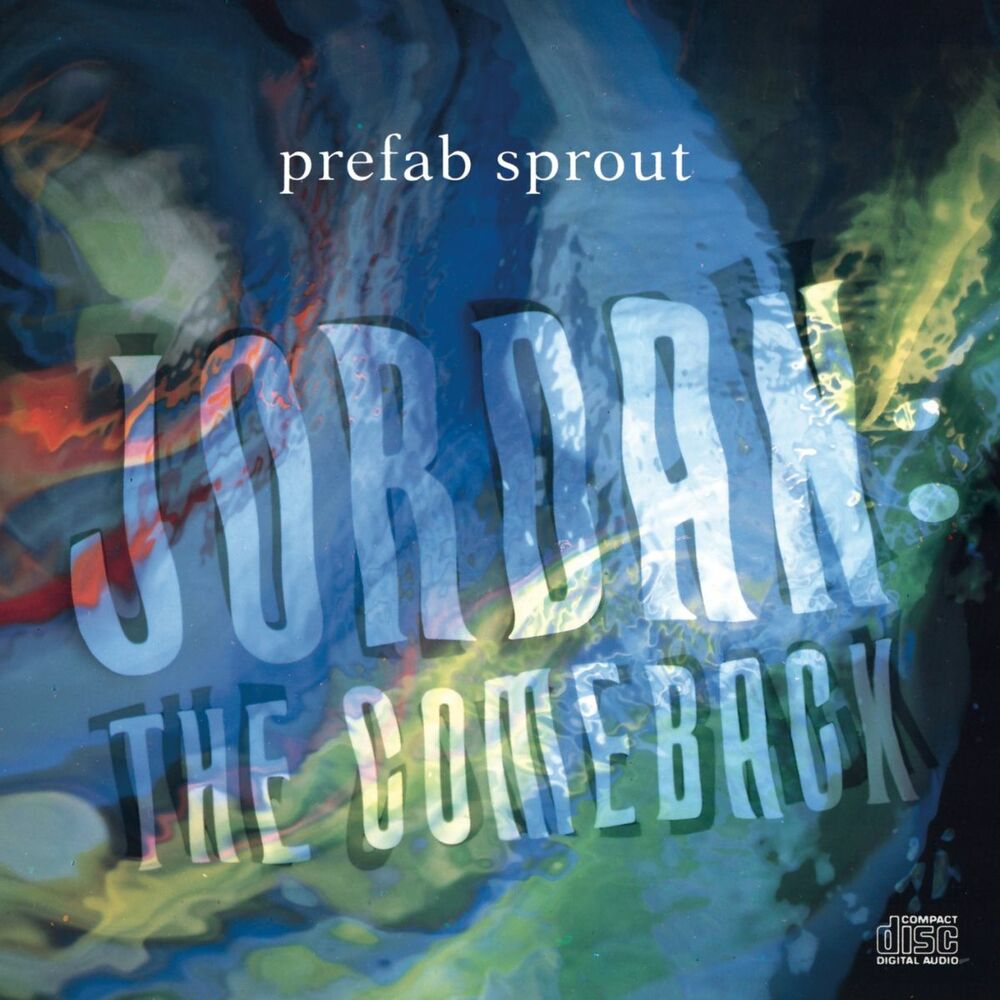
Jordan: The Comeback
- Released2 October 1990
- UK peak No. 7
- Weeks on UK chart 17
- Entered UK chart 2 September 1990
- LabelEpic
- Tracks19 · 64 min
3 tracks from it charted as singles. Press a flag to play it in the chart where it peaked.
Tracks
| 1 | Looking For Atlantis No. 51 · 1990 | 4:00 | |
| 2 | Wild Horses | 3:43 | |
| 3 | Machine Gun Ibiza | 3:43 | |
| 4 | We Let The Stars Go (Single Version) No. 50 · 1990 | 3:34 | |
| 5 | Carnival 2000 (Single Version) | 3:22 | |
| 6 | Jordan: The Comeback (Single Version) | 4:11 | |
| 7 | Jesse James Symphony | 2:15 | |
| 8 | Jesse James Bolero | 4:09 | |
| 9 | Moon Dog | 4:08 | |
| 10 | All The World Loves Lovers No. 61 · 1992 | 3:50 | |
| 11 | All Boys Believe Anything | 1:34 | |
| 12 | The Ice Maiden (Single Version) | 3:20 | |
| 13 | Paris Smith | 2:55 | |
| 14 | The Wedding March | 2:47 | |
| 15 | One of the Broken (Single Version) | 3:51 | |
| 16 | Michael | 3:02 | |
| 17 | Mercy | 1:22 | |
| 18 | Scarlet Nights | 4:14 | |
| 19 | Doo-Wop In Harlem | 3:43 |
About the album
Jordan: The Comeback is the fifth studio album by English pop band Prefab Sprout, released by Kitchenware Records and CBS on 28 August 1990. Comprising 19 tracks and incorporating a range of musical styles and lyrical themes, the album has been regarded by both the band and critics as its most ambitious project. It was produced by Thomas Dolby, who had previously worked with the band on their 1985 album Steve McQueen but had been unable to participate fully in the production of its 1988 follow-up, From Langley Park to Memphis.
Frontman Paddy McAloon divided the album thematically into four sections – conventional pop songs, a suite about Elvis Presley, love songs and material exploring "death and fate". The lyrics frequently address religion and celebrity, alluding to figures such as Jesse James, Agnetha Fältskog, God and the Devil. Upon its release, the album received widespread critical acclaim and achieved commercial success, reaching number 7 on the UK Albums Chart. Its singles performed less successfully – "Looking for Atlantis" and "We Let the Stars Go" peaked at number 51 and 50, respectively, on the UK Singles Chart while Jordan: The EP reached number 35. The album was nominated for Brit Award for British Album of the Year at the 1991 Brit Awards.
Background and recording
Following the release of the successful From Langley Park to Memphis (1988), frontman Paddy McAloon spent around a year writing and recording demos for Prefab Sprout's next album. He created home recordings more elaborate than those for previous albums and wished for the project to resemble a Disney movie soundtrack produced by Trevor Horn. McAloon kept in contact with collaborator Thomas Dolby, described by Giles Smith of The Independent as "a producer who works from a sound-library of other-wordly squeaks and shimmers". When Dolby received a demo tape, he considered many of the songs so complete that there was little he could do to improve them. McAloon, however, felt strongly that the album needed to be made in a professional recording studio. He ultimately considered Dolby's contribution in the studio so great that, barring a few tracks, he was a de facto band member on the album.
Recording commenced in June 1989, with the album title announced the same month in the press release for Protest Songs.
Release
Jordan: The Comeback was issued on 28 August 1990 by Kitchenware Records and CBS. Its liner notes dedicate the album to Dolby and manager Keith Armstrong and carry a lighthearted special thanks to "the staff of Rollmo Studios for their pioneering use of the Zorrophonic™ recording process". The album reached number 7 on the UK Albums Chart, ultimately spending a total of 17 weeks on the chart. It was certified gold by the British Phonographic Industry in November 1990. On the European Top 100 Albums chart, it peaked at number 31. The album was extensively promoted in the UK, with features appearing in national newspapers including The Daily Telegraph and The Guardian and a profile of the band on BBC2's Rapido. In October, the band embarked on a UK tour in support of the album, breaking four years of live inactivity. The album was nominated for Brit Award for British Album of the Year at the 1991 Brit Awards, losing to George Michael's Listen Without Prejudice Vol. 1.
Two singles and an EP were released from the album.
Critical reception
Jordan: The Comeback garnered widespread acclaim upon release. Stuart Maconie of NME described the album as "riding a thematic railroad from nuggets of pure pop philosophy to weighty matters of the soul". Comparing the album's ambition to "other great pop jamborees from Sign o' the Times to the White Album", Maconie commented "to say it's the pop triumph of the year is to damn it with faint praise". David Wild of Rolling Stone said, "If Brian Wilson at the height of his creative powers had spent a year in the studio working up a concept album about love, God and Elvis, the result might have sounded like Jordan: The Comeback. Simon Reynolds of Melody Maker considered the album the band's best since Steve McQueen, praising it as "exquisite, sumptuous, marvellously intricate, angelically forceful". Record Mirror praised what it called "a masterly collection of 19 richly emotive songs". The Washington Post's Joe Brown praised the album's "smart lyrics, buoyant melodies and a pure pop charm the likes of which we haven't heard since the Beatles, or at least Elton John".
Aftermath and legacy
Following the album's release, McAloon worked on several similarly ambitious projects. He planned to follow up Jordan with Let's Change the World with Music, an album with religious themes that further reflected the influence of gospel music. After the completed demo tape received a muted reception from Sony in 1993, McAloon expanded the concept of one of its songs into Earth, the Story So Far, a concept album featuring songs about Adam and Eve and Neil Armstrong. McAloon worked on Earth for two years before abandoning it, fearing it would be too long and expensive for release. Other prospective Prefab Sprout projects devised during this period include Behind The Veil, based on the life of Michael Jackson, a romantic album named Knights in Armour and a collection of spiritual compositions titled The Atomic Hymn Book. The ultimate follow-up to Jordan became Andromeda Heights (1997), largely made up of songs written for previous conceptual projects.