2 tracks from it charted as singles. Press a flag to play it in the chart where it peaked.
Tracks
| 1 | 4:54 | ||
| 2 | Baila Casanova | 3:36 | |
| 3 | Border Girl (Album Version) | 3:36 | |
| 4 | The One You Love (Album Version) No. 97 · 2002 | 3:47 | |
| 5 | Not That Kind of Girl (Album Version) | 3:26 | |
| 6 | Undeniable (Album Version) | 3:29 | |
| 7 | The Last Goodbye (Album Version) | 4:39 | |
| 8 | Stereo (Album Version) | 3:47 | |
| 9 | Sexual Lover (Album Version) | 3:58 | |
| 10 | Fire (Sexy Dance) (Album Version) | 3:29 | |
| 11 | I Was Made For Loving You (Album Version) | 3:33 | |
| 12 | Si Tu Te Vas (Radio Edit) | 3:38 | |
| 13 | Baila Casanova | 3:46 | |
| 14 | Todo Mi Amor | 3:36 | |
| 15 | Libre (Album Version - Spanish) | 3:42 | |
| 16 | Y Yo Sigo Aqui | 3:58 |
About the album
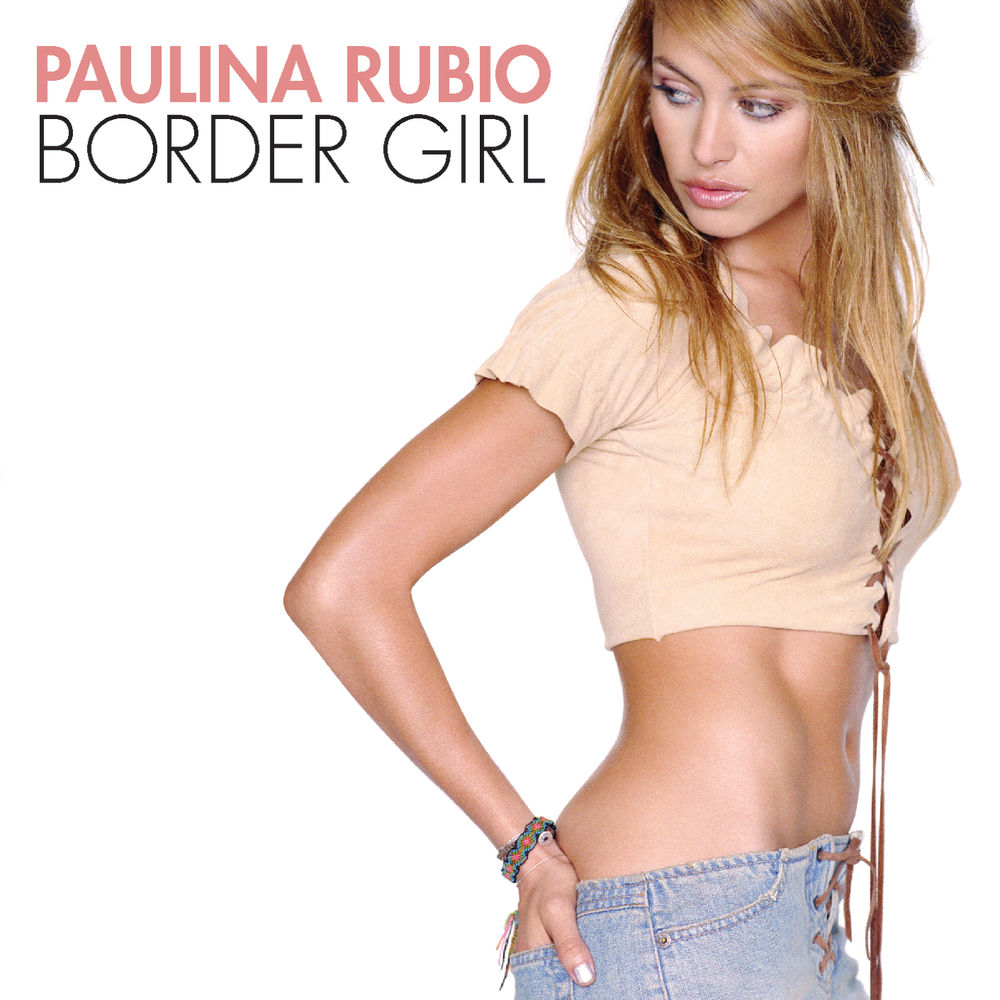
Border Girl is the sixth studio album and first English-language album by Mexican recording singer Paulina Rubio. It was released on 18 June 2002 internationally by Universal Records and later launched in Japan on 21 August 2002 by Umvd Labels. For her crossover into the English-language pop market, Rubio worked with writers and producers such as Kenny Flav, Lenio Purry, Doug Morris, Gen Rubin, Richard Marx, Brett James, Troy Verges, Michelle Bell, Jodi Marr and works again with Estefano, Chris Rodríguez and Marcello Acevedo. Its music incorporates genres of pop with influences of dance and pop rock, dived into elements of R&B, disco, ranchera, hip hop, house, and electronica. Its lyrics address the subjects of love, sexuality and self empowerment.
Upon its release, Border Girl received positive reviews from music critics, many of whom praised its production and ability to combine musical genres. The album was a commercial success in America and Spain. In the US, the album peaked at number eleven on the Billboard 200 chart, becoming Rubio's biggest album in the country; it was certified gold by the Recording Industry Association of America (RIAA) for shipments of 500,000 units.
Six singles were released from the album. The lead single, "Don't Say Goodbye" was released in April 2002 and became a commercial success, would become her most successful song in English.
Background and production
In 1997, after it released Rubio's fourth studio album Planeta Paulina (1996), EMI Music declined to release Rubio's first English crossover album, which was supposed to be the English version of its production. Some tracks were included on CD and Maxi singles formats from the songs "Solo Por Ti" and "Enamorada", but the promotion was limited. Eventually, Rubio got in a legal battle against EMI Music for not fulfilling what they had already planned and had to pay money through Universal Music to let her leave the record company.
After the success of her previous album Paulina, which was certified four times-platinum in Rubio's native country Mexico for shipment of 600,000 units, and eight times-platinum in the US for shipment of 800,000 units, becoming the best-selling Latin album of 2001, Universal Records decided to launch Rubio's career in the English market.
Title and artwork
The album's name takes the title of the song "Border Girl", written by Richard Marx. Rubio liked it as an album title because she wanted to "reflect who I am". Several media opined it was a pun, and that the singer was referring to her crossover music, since it was her first English-language album. But in every interview, Rubio explained that "Border Girl is Paulina, her story, her life, growing up in different countries of the world, absorbing that culture and putting it on her album", using the parallelism as a musical device between her album and herself.
In reviewing Rubio's impact on U.S. Hispanic culture, Professor Angharad N.
Singles
Preceding the album release, "I'll Be Right Here (Sexua Lover)" was released as a contemporary hit radio single —then still without it being conceived— on 26 June 2001 in United States. The song is the English version of massive success single "Y Yo Sigo Aquí", and was well received by music critics, whom complimented its danceability and Hi-NRG style. The single did not receive any promotion due Universal Music released it while Rubio still promoting Paulina album in Europe, but in 2003 it reached top 50 singles in Czech Republic, and was a hit on dance/electronic radio airplay in Russia and featured on the main cover of various artists compilation album Танцевальный Рай 14 (Dance Paradise 14). An accompanying music video for the single was directed by Simón Brand and features Rubio as a sexual girl, dancing in a party at the beach around several young girls and boys.
"Don't Say Goodbye" was released as the lead single of the album on 30 April 2002. It received generally positive reviews from music critics and was praised for its dance influences.
Critical reception
Border Girl received generally favourable reviews from music critics. Jose F. Promis from Allmusic gave the album an extremely positive review calling it "one of the most interesting and international pop albums of 2002" and praised the production of the album as "a winning combination of different musical styles, successfully bridging pop, dance, hip-hop, rock, ballads, Latin, and even ranchera into one delicious package." Nick Duerden, in an article for Blender, said that Border Girl "is bright, breezily charming and extremely rhythmic." Joey Guerra from Amazon praised the album "a masterpiece that surpasses any pop album sung in any language." and said that "like its predecessor [Paulina], it combines beautiful hooks with vocals and backing vocals, captivating rhythms and abundant energy that are essential for a great pop album." Frank Kogan from The Village Voice also gave it an acclaimed review and enjoyed the dancepop music and disco-oriented of the album, saying that there is "such music plays in different ways for different listeners", and he excited for Rubio's vocals saying
Commercial performance
In the United States, the album sold 56,000 copies in its first-week and debuted at number eleven on the Billboard 200 chart, becoming Rubio's highest charting album in the region till date. In this region, the album was certified gold by the Recording Industry Association of America for shipments of 500,000 units. As of December 2006 the album had sold 286,000 copies in United States according to Nielsen SoundScan. In Rubio's native country Mexico, Border Girl was certified platinum for shipments of 150,000 units by the Asociación Mexicana de Productores de Fonogramas y Videogramas. To December 2002, the album sold 154,948 copies in this region.
The album achieved similar success in other regions. In Spain, the album peak at number three on the Top 100 Albums chart, and was certified platinum for sales of 100,000 units by the Productores de Música de España. In Chile, the album was certified gold. The album managed to chart on countries such as Japan, Italy and on the Swedish album charts where Paulina had not charted before.