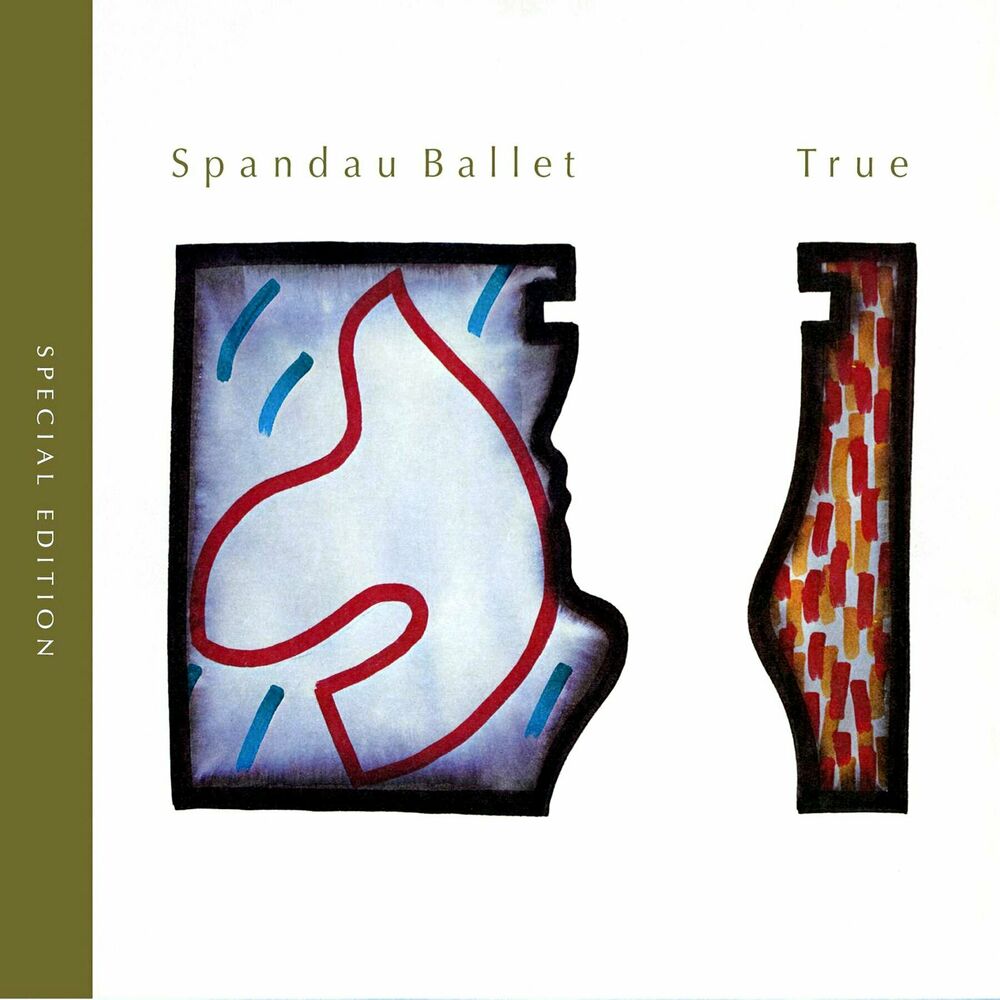
True (Special Edition)
- Released4 March 1983
- UK peak No. 1
- Weeks on UK chart 90
- Entered UK chart 6 March 1983
- LabelParlophone UK
- Tracks22 · 98 min
5 tracks from it charted as singles. Press a flag to play it in the chart where it peaked.
Tracks
| 1 | Pleasure (2003 Remaster) | 3:34 | |
| 2 | 3:40 | ||
| 3 | Code of Love (2003 Remaster) | 5:11 | |
| 4 | 4:50 | ||
| 5 | Lifeline (2003 Remaster) No. 7 · 1982 | 3:34 | |
| 6 | Heaven Is a Secret (2003 Remaster) | 4:26 | |
| 7 | Foundation (2003 Remaster) | 4:06 | |
| 8 | 6:33 | ||
| 9 | Lifeline (7" Short Dub; 2010 Remaster) No. 7 · 1982 | 3:37 | |
| 10 | 2:44 | ||
| 11 | 7:14 | ||
| 12 | Lifeline (12" Mix; 2010 Remaster) No. 7 · 1982 | 5:26 | |
| 13 | 4:28 | ||
| 14 | Lifeline (12" Dub; 2010 Remaster) No. 7 · 1982 | 5:17 | |
| 15 | 6:42 | ||
| 16 | 2:44 | ||
| 17 | Lifeline (A Capella; 2010 Remaster) No. 7 · 1982 | 2:02 | |
| 18 | 5:36 | ||
| 19 | Code of Love (Live at Sadlers Wells) | 5:39 | |
| 20 | The Freeze (Live at Sadlers Wells) No. 17 · 1981 | 2:16 | |
| 21 | Glow (Live at Sadlers Wells) | 3:42 | |
| 22 | Heaven Is a Secret (Live at Sadlers Wells) | 4:51 |
About the album
True is the third studio album by the English new wave band Spandau Ballet, released on 4 March 1983 by Chrysalis Records. The band's songwriter/guitarist Gary Kemp realised after the release of their second album that the nightclub audience they initially wanted to attract had lost interest in them in part because of the band's transition from dance music to pop. He no longer felt obligated to keep writing music for them and shifted his focus to soul and R&B influences such as Marvin Gaye and Al Green for this album. Kemp thought that bandmate Steve Norman's newfound interest in the saxophone would be well-suited to the sound he was going for, as would the decision to record most of the album at Compass Point Studios in the Bahamas.
After an unsuccessful attempt to begin work on the album with producer Trevor Horn, the band tested out their working relationship with Tony Swain and Steve Jolley while recording its first single, "Lifeline", and chose to produce the album alongside them. "Lifeline" was a top ten hit on the UK Singles Chart, and its follow-up, "Communication", also did well. The album became available as the second single climbed the charts, and the overwhelming response to the title track dictated its release as the third single from the album, leading it to four weeks as the most popular song in the UK.
Background, development and recording
When Spandau Ballet first formed, their guitarist/songwriter Gary Kemp had been aware of how previous generations of Britain's youth culture had bands representing them, such as the Mods having the Who and the Small Faces. He wanted people to associate Spandau with the fashion-wise clientele of a popular Tuesday night London gathering called the Blitz, and had written songs that sounded like what was played there, what he described as "white European dance music".
Their first album, Journeys to Glory, was a successful culmination of this style of material that Kemp had written at his own pace and that had been tested in front of the Blitz crowd over an extended period of time, but coming up with songs for their second effort, Diamond, was more challenging. Although following a renewed interest in funk gave them a number 3 UK hit with its first single, "Chant No.
Release and commercial performance
True was released on 4 March 1983 and received silver certification from the British Phonographic Industry on 9 March for reaching the 60,000 units of shipment threshold. It entered the UK Albums Chart on 12 March to begin a chart run of 90 weeks, one of which was at number 1. Gold certification for reaching 100,000 units was issued on 11 April, and platinum (300,000 units) came the following month on 23 May. It also reached the top spot in the Netherlands and New Zealand and performed well in other countries. In the US, the album debuted on Billboard magazine's Top LPs & Tapes chart in the issue dated 14 May 1983 and peaked at number 19 during a 37-week run.
To commemorate its 20th anniversary, a remastered version of "True" was released on 29 April 2003 as a single CD with the original eight tracks along with the music video for "Gold" and some home video footage of the band. The original 8-track album was also issued in 2003 on the high-resolution super audio CD format as a Hybrid SACD (in stereo only).
Critical reception
Billboard magazine gave the album a positive review upon its release in the US, noting that "Pleasure" and "Code of Love" "linger with the fresh feel of new music while owing to swing era rhythms, even MOR." Most reviewers at the time, however, qualified their praise. Parke Puterbaugh of Rolling Stone magazine wrote, "You can shut your eyes while listening to True and almost imagine that Spandau Ballet has had nothing to do with clothes, makeup or any fashion-show pseudoevents" and concluded that the album was "a sleekly executed, surprisingly affecting record, and welcome proof that bunch of clotheshorses can place high in the musical stakes, too." Don Mackay of Rip It Up also summed up his comments with a reference to their vestiary history: "While still some distance short of profundity, the result is generally pleasant enough with tracks like 'Communication', 'Lifeline' and 'Foundation' at least proving that the Ballet really can dance.
Singles and videos
Swain and Jolley's selection for their tryout as producers, "Lifeline", became the first single released from the album and debuted on the UK Singles Chart dated 2 October 1982. It peaked at number 7 during its 9 weeks there and reached the pop charts in other countries. In the US it "bubbled under" Billboard magazine's Hot 100 to number 108, and it was paired with "Communication" when it appeared on their Dance/Disco Top 80 chart. The US chart appearances coincided with the airing of the music video on MTV in the spring of 1983. Critics were divided, with some finding it bland and others appreciating the R&B-style vocals.
The album was completed in December 1982, but Kemp explained that when the next single needed to be chosen, the band's manager, Steve Dagger, "didn't want to go with a ballad next and recommended another up-tempo first. 'Communication' got the band vote. Why we didn't go straight for 'True' or 'Gold' as the next single, I'm not sure.
Aftermath
The number 29 showing by "Gold" in the US was the first signal to Kemp that Chrysalis America was not promoting them. "Communication" only reached number 59 in the US in 1984, and "Only When You Leave", the first single from their next album, Parade, became their last Hot 100 entry when it peaked at number 34 later that year. Kemp was unhappy with those performances as well and blamed the low numbers on a perceived conflict between Chrysalis founders Chris Wright and Terry Ellis distracting them from promotional efforts. Wright refused to license the band to a bigger label in the US, so they sought legal advice to get out of their contract. The disappointing chart performance in the US led Spandau Ballet to leave Chrysalis for CBS Records, which released their Parade follow-up, Through the Barricades, in 1986.
Hadley felt that the band's inability to sustain the interest of the American public resulted from a few other factors working against them, primarily that their big US hit was very different to what they had already succeeded with elsewhere.