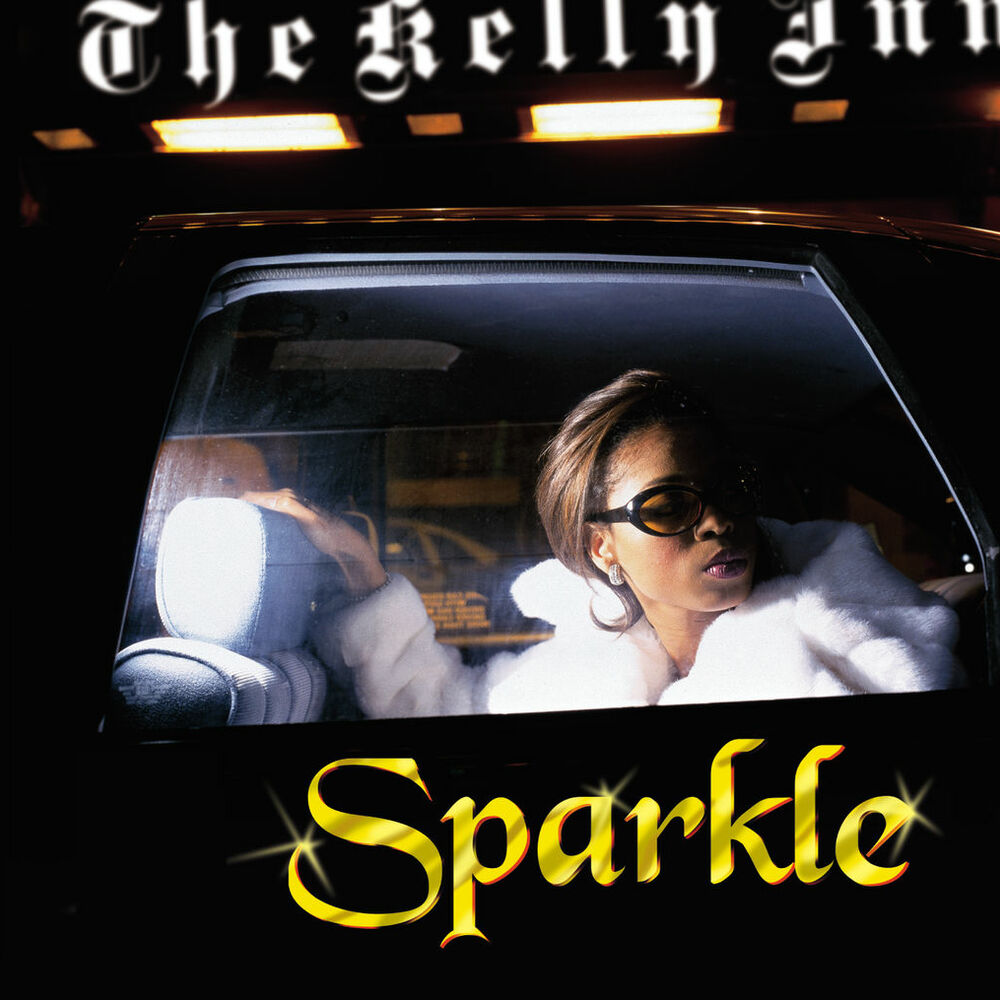
Sparkle
- Released10 July 2008
- UK peak No. 57
- Weeks on UK chart 2
- Entered UK chart 26 July 1998
- LabelInterscope
- Tracks15 · 63 min
3 tracks from it charted as singles. Press a flag to play it in the chart where it peaked.
Tracks
| 1 | Good Life (Album Version) | 3:47 | |
| 2 | Time To Move On (Album Version) No. 40 · 1998 | 4:03 | |
| 3 | Lean On Me (Album Version) | 4:22 | |
| 4 | I'm Gone (Album Version) | 5:14 | |
| 5 | Turn Away (Album Version) | 4:43 | |
| 6 | What About (Album Version) | 4:47 | |
| 7 | Be Careful (Album Version) No. 7 · 1998 | 5:17 | |
| 8 | Nothing Can Compare (Album Version) | 4:09 | |
| 9 | Quiet Place (Prelude) (Album Version) | 1:39 | |
| 10 | Lovin' You (Album Version) No. 65 · 1999 | 4:08 | |
| 11 | Straight Up (Album Version) | 4:46 | |
| 12 | Vegas (Album Version) | 4:09 | |
| 13 | No Greater (Prelude) (Album Version) | 3:04 | |
| 14 | Play On (Album Version) | 5:07 | |
| 15 | Plenty Good Lovin' (Album Version) | 3:24 |
About the album
Sparkle in the Rain is the sixth studio album by Scottish rock band Simple Minds, released on 6 February 1984 by record label Virgin in the UK and A&M in the US. The album continued the commercial success the band experienced with their previous studio album, peaking at number 1 on the UK Albums Chart on 18 February 1984, and reached the top 20 in countries including New Zealand, Netherlands, Sweden, and Canada. Receiving mostly positive reviews in the United Kingdom and the United States, Sparkle in the Rain was ultimately certified platinum in the UK by the British Phonographic Industry, and significantly increased media interest in the band.
The lead single from the album, "Waterfront", was released in November 1983 to commercial success, followed by "Speed Your Love to Me" which was released in January 1984 ahead of the albums release. A third and final single, "Up on the Catwalk", was released in March 1984 and continued the commercial success for the band, with all three singles from the album reaching the top thirty in the United Kingdom.
Background
Signs of a possible change in musical direction into a more stadium-oriented sound first became apparent during a series of live performances in the summer months of 1983 by Simple Minds to large European crowds. Lead singer Jim Kerr returned to a natural, unadorned facial and hair style, as "whatever they would have to say would be in the music." "Those gigs brought us back to the rawest kind of state, I think," Kerr said. "In places like that, 50,000 people, there's just no room for subtlety, and there's no need for it, there's no want for it." This foresaw the band coming into direct contact with U2 for the first time at the Belgian rock festival Torhout-Werchter; upon meeting the two bands immediately developed a strong liking for each other. Kerr remarked, "we saw a lot of ourselves in them and vice versa," and refuted the accusation that Simple Minds were merely joining the "new rock" led by U2. "We get this thing levelled at us of being influenced by them, but they're equally influenced by us.
Recording
In September 1983, Simple Minds travelled to Monnow Valley Studio in Rockfield, near Monmouth in Wales, for three weeks to work on some new material; Lillywhite accompanied them for the last two weeks to meet the musicians and suggest some modifications to their music. This material consisted of around six tracks developed during a session the band had spent at a recording studio called The Chapel in Lincolnshire in January, and other initial samples recorded in London's Nomis Studios before their performance at Phoenix Park. At Rockfield, most of the tracks were dramatically changed, as they had begun as demos consisting only of work by Mick MacNeil and Charlie Burchill, with some drum and bass machine sounds overlapping. With drummer Mel Gaynor now having fully integrated himself into the band, the songwriting was beginning to be influenced consistently from all group members.
The group relocated to Townhouse Studios in London by October, by which time their updated material retained "only a bassline or keyboard melody from the original four-track demo".
Composition and lyrics
Kerr, before its release, described the forthcoming Sparkle in the Rain as an "art record—art without tears with masses of muscle". The band's new drummer Mel Gaynor, who had contributed for some tracks on the previous record, agreed on the album's aggressiveness: "On this album I'm getting a few of my ideas across, not only in the drumming field but in other fields as well. It's a lot different from New Gold Dream, both sound-wise and material-wise. The last one was very smooth, very polished. This album's got a bit more dirt in it." Regarding the role of producer Steve Lillywhite, Brian Hogg wrote that Sparkle in the Rain "captured the bravura of their in-concert sound" and Lillywhite "introduced a dynamic, often contrasting, perspective quite unlike the panoramic standpoint of its predecessor, but there was no denying the resultant brash excitement." Adam Sweeting described how, during the recording process of "Up on the Catwalk", "Forbes and Gaynor had combined to create a steamrolling rhythm track which came hammering out of the opening chorus like a runaway train."
Sparkle in t
Release
Due to a desire to release the album worldwide simultaneously, Simple Minds decided not to put the record out for sale before Christmas 1983, instead releasing Sparkle in the Rain on 6 February 1984. The first UK pressing was issued on white vinyl and the first Canadian pressing was issued on transparent vinyl; all other foreign editions were initially issued on black vinyl; the album immediately entered the UK Albums Chart at No. 1 to become the band's first chart-topper, and it remained in the charts for 57 weeks; among the band's records, only Once Upon a Time has bettered this chart run. The first Canadian pressing was issued on transparent vinyl (but using the standard green/red Virgin label instead of the custom design); the album peaked at No. 14 in the Canadian RPM national album chart. Sparkle in the Rain was certified gold in Canada for selling over 50,000 units in that country, and topped the New Zealand Albums Chart for two weeks, further remaining in their charts for eighteen weeks. Sparkle in the Rain also peaked at No.
Critical reception
Upon release, Sparkle in the Rain received mostly favourable reviews. In the U.S., Parke Puterbaugh writing for Rolling Stone awarded the album four stars out of five, describing the record as the band's finest, and their playing as weaving "a complex web of sound from the unlikeliest parts: churchy, staccato keyboards; lacelike, arpeggiated guitar lines and soaring wisps of feedback; and metallic-sounding drums." Puterbaugh summarized Sparkle in the Rain as "Roxy Music-gone-2001". A review in the College Music Journal complimented how Lillywhite's production gave the band "a grand sound to match their lyrical ambitions", drawing comparisons with the sounds of bands such as U2 and Big Country and how "it helps Simple Minds sound more cohesive...the words and music forming a complete whole rather than two antagonistic elements as in the past." Sparkle in the Rain was listed by CMJ at No. 20 in their "Top 20 Most-Played Albums of 1984".
In the UK, meanwhile, where the album met with much greater commercial success at No.