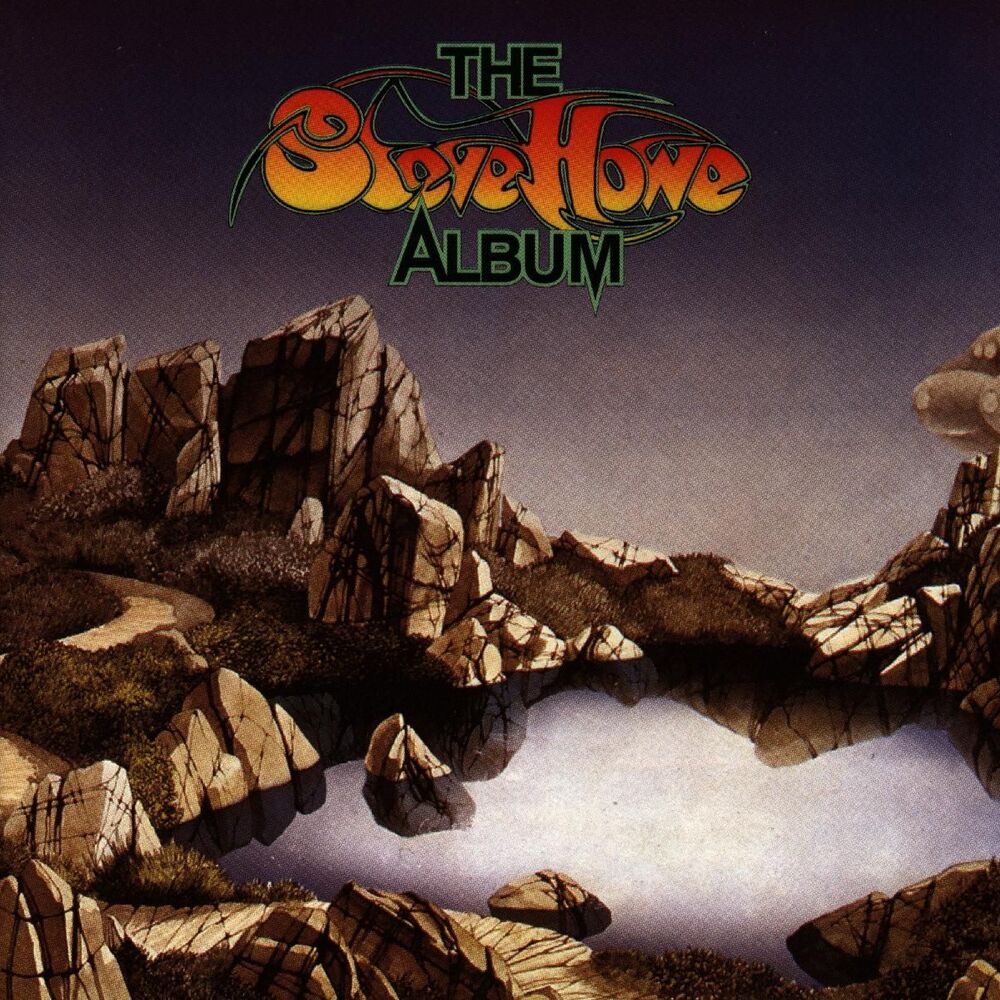
The Steve Howe Album
- Released17 August 2010
- UK peak No. 68
- Weeks on UK chart 2
- Entered UK chart 18 November 1979
- LabelRhino Atlantic
- Tracks10 · 41 min
Tracks
| 1 | Pennants | 4:33 | |
| 2 | Cactus Boogie | 2:03 | |
| 3 | All's a Chord | 4:58 | |
| 4 | Diary of a Man Who Vanished | 2:35 | |
| 5 | Look over Your Shoulder | 5:01 | |
| 6 | Meadow Rag | 2:41 | |
| 7 | The Continental | 2:52 | |
| 8 | Surface Tension | 3:31 | |
| 9 | Double Rondo | 8:14 | |
| 10 | Concerto in D (Second Movement) | 4:49 |
About the album
The Yes Album is the third studio album by English progressive rock band Yes, released in the UK on 19 February 1971 and in the US on 19 March 1971 by Atlantic Records. It was the band's first album to feature guitarist Steve Howe, who replaced Peter Banks in 1970, as well as their last to feature keyboardist Tony Kaye until 1983's 90125.
The band spent mid-1970 writing and rehearsing new material at a farmhouse at Romansleigh, Devon, and the new songs were recorded at Advision Studios in London in the autumn. The album was the first by the band to feature all-original material. While the album retained close harmony singing, Kaye's Hammond organ, and Chris Squire's melodic bass, as heard on earlier releases, the new material also covered further styles including jazz piano, funk, and acoustic music. All of the band members contributed ideas, and tracks were extended in length to allow music to develop. Howe contributed a variety of guitar styles, including a Spanish laúd, and recorded the solo acoustic guitar piece "Clap", live at the Lyceum Theatre, London.
The album was a critical success and a major commercial breakthrough for Yes, who had been at risk of being dropped by Atlantic due to the commercial failures of their first two albums.
Background
Yes had already recorded two albums for Atlantic Records by mid-1970, but neither had been commercially successful and the label was considering dropping them. They had replaced founding member Banks with Howe, who enjoyed playing a wider variety of styles, including folk and country music, and played a mix of electric and acoustic guitars. Singer Jon Anderson later said that Howe could "jump from one thing to the other, very fast, very talented." After some warm-up gigs with Howe, the band moved to Devon to write and rehearse new material. They arrived at a cottage in Churchill, north of Barnstaple, but felt restricted there and were not allowed to make any noise after dark. They advertised in the local paper for a new location, and moved to Langley Farm in Romansleigh, near South Molton, some 20 mi (32 km) away. Howe in particular enjoyed working on the farm, and eventually bought it. Following rehearsals, the band booked Advision Studios in London with producer Eddie Offord and spent the autumn recording.
Artwork
The front cover was shot by Phil Franks the day after the Basingstoke gig accident. Franks had already taken some photos from the Lyceum gig, but felt he needed something more for the front cover. The band showed up late having been in hospital earlier that day, and only 30 minutes were available for a shoot. Unable to get a satisfactory photo in the studio, Franks took the band round to his flat, grabbed a polystyrene mannequin head from a bin, put a 1,000 watt bulb in the kitchen light fitting, and improvised the shot. Franks credited the sleeve designer, Rolling Stone art director Jon Goodchild, for making the cover a success. When Yes performed a live version of "Yours Is No Disgrace" for the German television series Beat-Club in April 1971, footage of the band was combined with that of another mannequin head spinning over a chair, mimicking the cover's concept.
The inside of the album's gatefold sleeve shows Kaye playing a Hammond organ, while the front cover showed his leg in plaster, following the accident.
Release
The Yes Album was released in the UK on 19 February 1971. It was a commercial success and was the band's breakthrough album, selling around 60,000 copies upon release and reaching number 4 in the UK. and number 40 in the US. It has been certified Platinum by the Recording Industry Association of America for selling over one million copies.
At that time British postal workers were on strike, preventing record stores from sending sales reports to Melody Maker, which compiled the charts most followed by the music industry. Richard Branson owned a record store on Oxford Street in London, the first business enterprise in what he later built up into Virgin Group. He began compiling a chart from sales at his store and several others; in the interim the BBC and other media used it. Lane, newly hired as the band's manager, promised them he would get their album in the charts, and did so by buying enough copies of it at the Virgin store to make it the bestselling album there and thus put it high in the charts.
Reception
The album had a positive reception from critics. John Koegel, writing for Rolling Stone, praised the instrumental unity between Squire, Howe and Kaye, but missed the cover songs present in the band's earlier albums. The album is one of three by Yes to appear in the book 1,000 Recordings to Hear Before You Die. Author Tom Moon preferred the group unity that he felt was missing on later releases and gave a positive impression of Anderson's vocals, saying the melodies in "I've Seen All Good People" were "instantly singable and still somehow deep." The album is also featured in the book 1001 Albums You Must Hear Before You Die.
In 2000 it was voted number 317 in Colin Larkin's All Time Top 1000 Albums.
Anderson was worried about the initial response to the album, but after about a month noticed that fans started singing along at concerts, and concluded that this musical style could be developed and still remain popular.
Reissues
The Yes Album was remastered and reissued in 2003 by Rhino Records with several bonus tracks, including a studio version of "Clap", entitled as Howe intended. In 2014, Steven Wilson of Porcupine Tree created a new stereo mix and a 5.1 surround sound mix, available as either a DVD or Blu-ray Disc. It was released on 21 April with bonus tracks including the studio version of "Clap", an extended version of "A Venture", and an alternative version of the album with live tracks, single edits, and an extended mix. The Blu-ray version also features an instrumental version of the album, a needle drop sample of the original vinyl release, and additional live tracks. More recently, it was reissued by Rhino in 2023 as a super deluxe edition, featuring the original album, instrumental tracks, studio recordings, live recordings, remixes, and other bonus tracks.