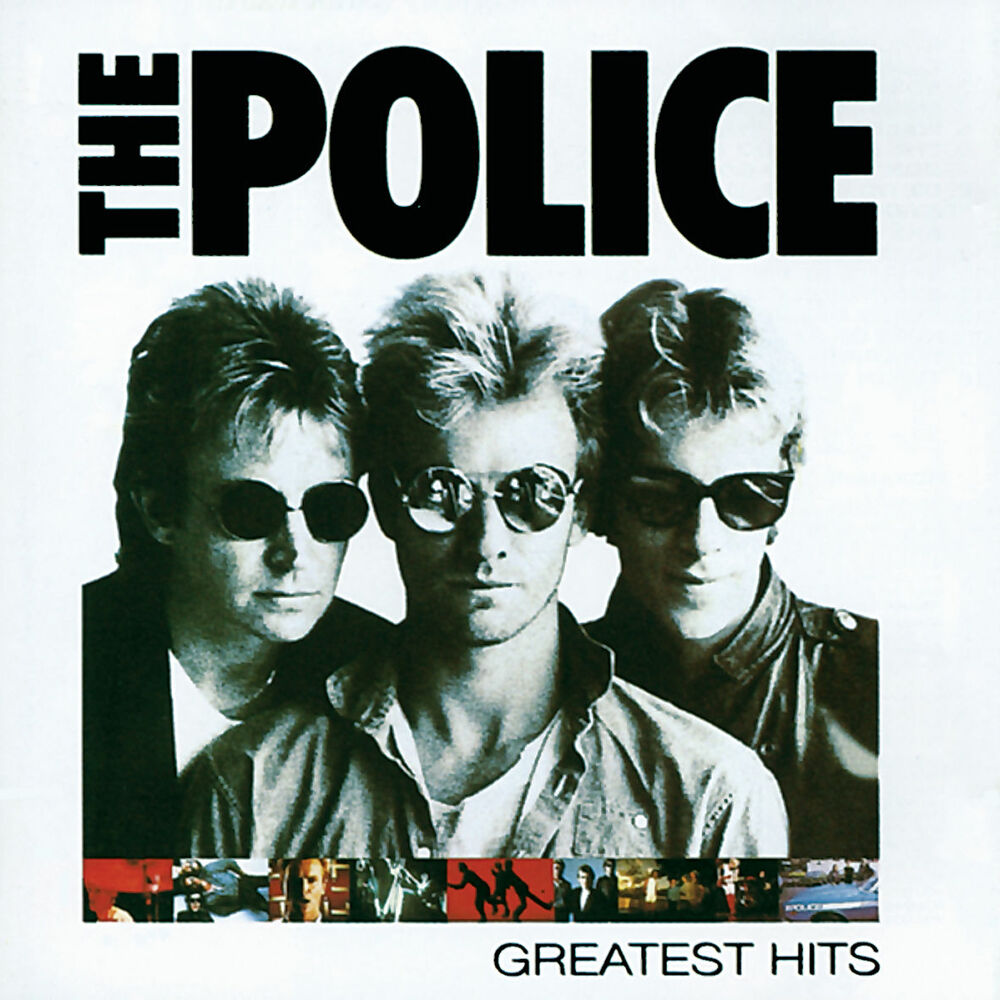
Greatest Hits
- Released28 September 1992
- UK peak No. 10
- Weeks on UK chart 18
- Entered UK chart 4 October 1992
- LabelPolydor Associated Labels
- Tracks16 · 68 min
14 tracks from it charted as singles. Press a flag to play it in the chart where it peaked.
Tracks
| 1 | 3:10 | ||
| 2 | 2:48 | ||
| 3 | So Lonely No. 6 · 1980 | 4:47 | |
| 4 | 4:49 | ||
| 5 | Walking On The Moon No. 1 · 1979 | 5:01 | |
| 6 | The Bed's Too Big Without You | 4:24 | |
| 7 | 4:03 | ||
| 8 | 4:07 | ||
| 9 | 4:20 | ||
| 10 | Invisible Sun No. 2 · 1981 | 3:43 | |
| 11 | 2:57 | ||
| 12 | 5:04 | ||
| 13 | 4:12 | ||
| 14 | 4:57 | ||
| 15 | 5:13 | ||
| 16 | Tea In The Sahara | 4:11 |
About the album
Greatest Hits is the second greatest hits album by the Police, released in September 1992 by A&M Records. It is the band's second compilation album following Every Breath You Take: The Singles. In contrast with its predecessor, it features all 14 original UK top 20 chart singles and five UK number-ones released by the band from 1978 to 1984, including the two missing singles from the previous 1986 compilation, "Synchronicity II" and the original version of "Don't Stand So Close to Me" which had been replaced with the 1986 re-recording. The album also includes two bonus album tracks, "The Bed's Too Big Without You" and "Tea in the Sahara". The cover photograph is by Duane Michals and it was taken at the time of the Synchronicity album. The inner sleeve features a collage of pictures of the band shot by different photographers during their career, including Miles Copeland, Peter Baylis, Adrian Boot, Akihiro Takayama, Anton Corbijn, Danny Quatrochi, Gabor Scott, Janette Beckman, Kim Turner, Michael Ross, Watal Asanuma and Andy Summers.
The album failed to chart in the US, but spent 36 weeks on the UK Albums Chart, where it peaked at number ten.
Critical reception
The album came out shortly after Sting's solo album The Soul Cages, prompting David Sinclair to point out in his review in Q magazine that "Copeland and Summers were far more than a passive vehicle for Sting's songs. As powerful personalities and assertive musicians in their own right, they gingered up Sting's basic ideas while putting the brakes on his tendency to earnest excess."