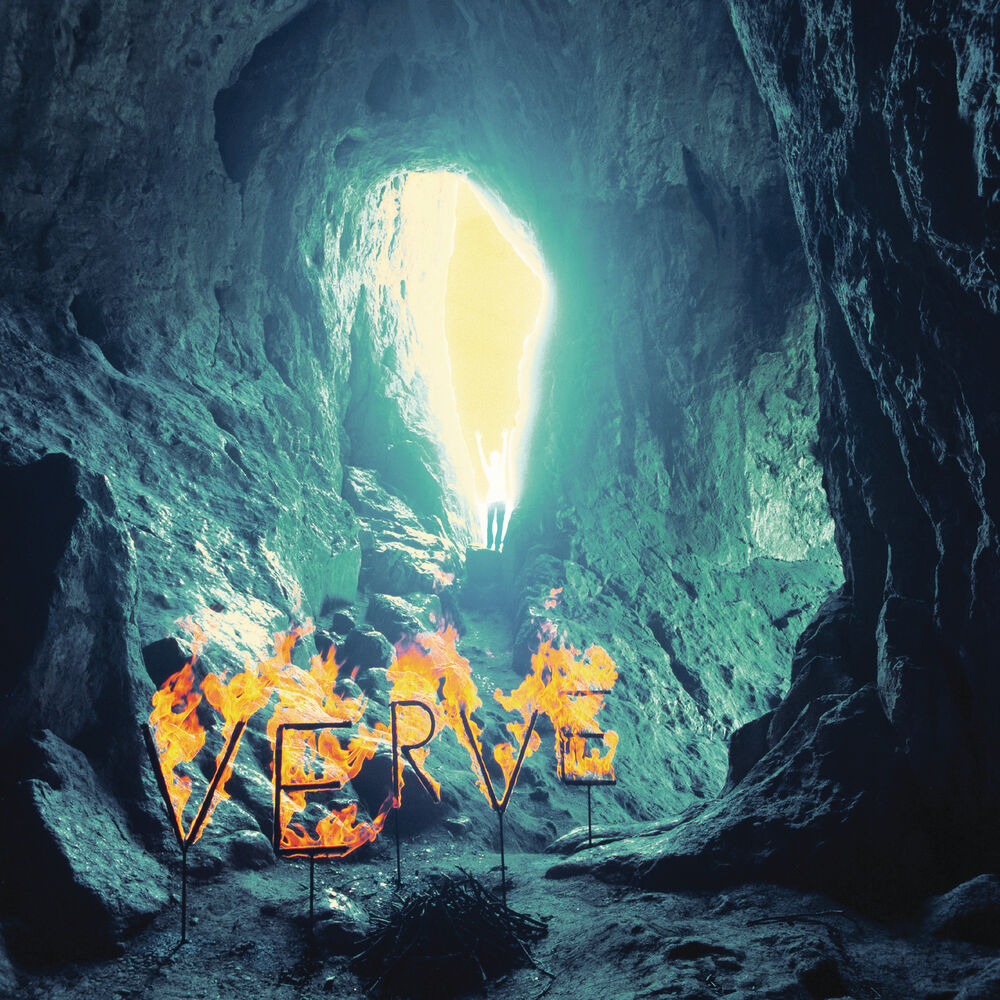
A Storm In Heaven
- Released9 September 2016
- UK peak No. 27
- Weeks on UK chart 2
- Entered UK chart 27 June 1993
- LabelUMC (Universal Music Catalogue)
- Tracks10 · 47 min
One track from it charted as a single. Press a flag to play it in the chart where it peaked.
Tracks
| 1 | Star Sail (Remastered 2016) | 4:00 | |
| 2 | Slide Away (Remastered 2016) | 4:03 | |
| 3 | Already There (Remastered 2016) | 5:38 | |
| 4 | Beautiful Mind (Remastered 2016) | 5:28 | |
| 5 | The Sun The Sea (Remastered 2016) | 5:16 | |
| 6 | Virtual World (Remastered 2016) | 6:17 | |
| 7 | Make It ‘Til Monday (Remastered 2016) | 3:12 | |
| 8 | Blue (Remastered 2016) No. 69 · 1993 | 3:18 | |
| 9 | Butterfly (Remastered 2016) | 6:39 | |
| 10 | See You In The Next One (Have A Good Time) (Remastered 2016) | 3:08 |
About the album
A Storm in Heaven is the debut studio album by the English rock band Verve, later the Verve, released on 21 June 1993 on Hut Records. The band had formed between school friends vocalist Richard Ashcroft, bassist Simon Jones, and drummer Peter Salisbury, with guitarist Nick McCabe joining shortly after. After a show in London, they signed to the Virgin Records imprint Hut Records in 1991, which released their first three singles in 1992. Following the appointment of the company Savage and Best as their management, the band recorded their debut album at Sawmills Studios in Cornwall with producer John Leckie. Referred to mainly as a psychedelic album, A Storm in Heaven was largely written in the studio.
"Blue" was released as the lead single from A Storm in Heaven in May 1993; initially, promotion saw them go on a UK tour, perform at Glastonbury Festival, and appear on a European tour with the Smashing Pumpkins. Following the release of the second single "Slide Away" in September 1993, Verve embarked on a headlining US tour and closed out the year on a UK tour with Oasis. They went on a headlining European tour in early 1992, prior to their stint on Lollapalooza, on which Salisbury got arrested and Ashcroft had to be hospitalized.
Background
While at school, Richard Ashcroft had the desire to make music but was unable to play any instrument. When he and his school friends Peter Salisbury and Simon Jones attended higher education, they had the idea of starting a band. Sometime later, Ashcroft heard Nick McCabe playing in a practice room at Winstanley College. After Ashcroft's mother bought him a guitar, he started a band with McCabe and a friend as the bassist. They went by the name the Butterfly Effect before it was changed to Raingarden. As Ashcroft was living in Wigan with Jones, and as their exams loomed, he asked Jones and Salisbury if they wanted to join his band. With their addition, the band re-christened themselves as Verve. Practice sessions followed, with them wanting to find their own sound and not bandwagon on the emerging Madchester movement, spearheaded by the Stone Roses and Happy Mondays. For almost a year, McCabe and Salisbury were unable to play another show, much to the chagrin of Ashcroft.
Recording
After shows supporting the Black Crowes, Verve set about to record their debut album. With a DAT machine and a mixing desk in tow, the band went to Wales, where they re-worked all the material they had, only keeping a fraction of it, such as "Slide Away" and "The Sun, the Sea". John Leckie approached Verve about producing them; he was known for his work with the Stone Roses, who were one of Ashcroft's influences. McCabe fixated on Leckie's work with the Fall instead, liking how he refined their sound. Leckie previously saw Verve in London when he initially went to see Whirlpool. Leckie was impressed to the point where he was actively searching gig listings for when they would perform again. Up to that point, he was known for achieving the best sound for newer bands, though he thought that there would be some difficulty in translating their sound onto a recording. Leckie was amazed by their "dynamics, how devastatingly loud they could be, and how quiet and sensitive they would be.
Title and themes
Phill Best proposed the album's name be Storming Heaven, taken from the 1989 book of the same name by Jay Stevens, which discusses American culture handling the effects of LSD. Best added, "how [the drug] was a shortcut to Nirvana ... so I said [to Ashcroft] you should call it 'storming heaven' because that's what your music does. I thought this was a good euphemism for what their music did," before Ashcroft altered it to A Storm in Heaven. Discussing the name, Ashcroft said he preferred music that can immerse the listener, making them "feel calm and soothing, and then hurt you a little bit more." Baker thought that the title was appropriate since the songs were made and recorded in a small timeframe. The album featured a "coherence that, for all the brilliance of their later albums, they would never achieve again.
Music
Ryan Dombal of Pitchfork explains that A Storm in Heaven "lives in that liminal state between jam and song, spontaneity and structure. It’s not calculating, but it never veers into sheer indulgence, either." As the band did not wish their debut to be a collection of hits, their first three singles were left off the track listing. Ashcroft retrospectively said it would have been a rip-off if it had their previous singles on it, preferring it to be "totally different, it's an actual event." He wanted to "make it special", an approach that Egan said "included textures created by additional instruments, including the flute, horns, accordion, and piano. Ashcroft would later assert that he was a believer in natural sounds and that Verve's attempt to be the future wasn't undermined by using classical instruments." The band wrote songs through jamming, prior to Ashcroft adding vocals to what they came up with. Best said they would practice without a vocal melody, resulting in drawn-out instrumental portions, which Ashcroft would scat over.
Release and name change
In May 1993, Billboard reported that Verve's debut studio album was planned for release the following month. Record companies PolyGram and Deutsche Grammophon filed a suit against Verve on 7 May 1993 at the US District Court in Los Angeles, California, claiming trademark infringement. It was in regards to Verve Records; PolyGram issued releases through this jazz imprint, while Deutsche Grammophon owned the rights to the label's name. All members of the band and Caroline Distribution, Hut and Virgin Records were listed as defendants in the suit, which alleged that their "activities were likely to cause confusion, mistake or deception as to the source of origin" of the band's releases. It sought an injunction to halt sales of any release bearing Verve's name, with damages to be determined.
Singles
"Blue" was released as the album's lead single on 10 May 1993. "Twilight", "Where the Geese Go", and "No Come Down" were included as its B-sides. "Blue" was issued to modern rock radio stations in the US in July 1994. Two music videos were made for "Blue": one aimed for the US market, shot in Dublin, Ireland; and the other, aimed for the British market, filmed in Islington, London. The latter version starts with the members going to a party located in a cellar with an "eerie little girl who looks like she belongs in The Exorcist. She's staring at them as Richard starts losing it spectacularly. In the end, as they walk out of the house and up into the cave featured in the cover of A Storm in Heaven, it's hard to tell whether they're as out of it as they seem or whether they're just acting."
"Slide Away" was issued to modern rock radio stations in the US in May 1993. It was released as a single in the UK on 20 September 1993, in the midst of their European tour.