Tracks
| 1 | TNT | 7:33 | |
| 2 | Swung From the Gutters | 5:52 | |
| 3 | Ten-Day Interval | 4:44 | |
| 4 | I Set My Face to the Hillside | 6:08 | |
| 5 | The Equator | 3:42 | |
| 6 | A Simple Way to Go Faster Than Light That Does Not Work | 3:33 | |
| 7 | The Suspension Bridge at Iguazú Falls | 5:38 | |
| 8 | Four-Day Interval | 4:45 | |
| 9 | In Sarah, Mencken, Christ, and Beethoven There Were Women and Men | 7:29 | |
| 10 | Almost Always is Nearly Enough | 2:42 | |
| 11 | Jetty | 8:21 | |
| 12 | Everglade | 4:21 |
About the album
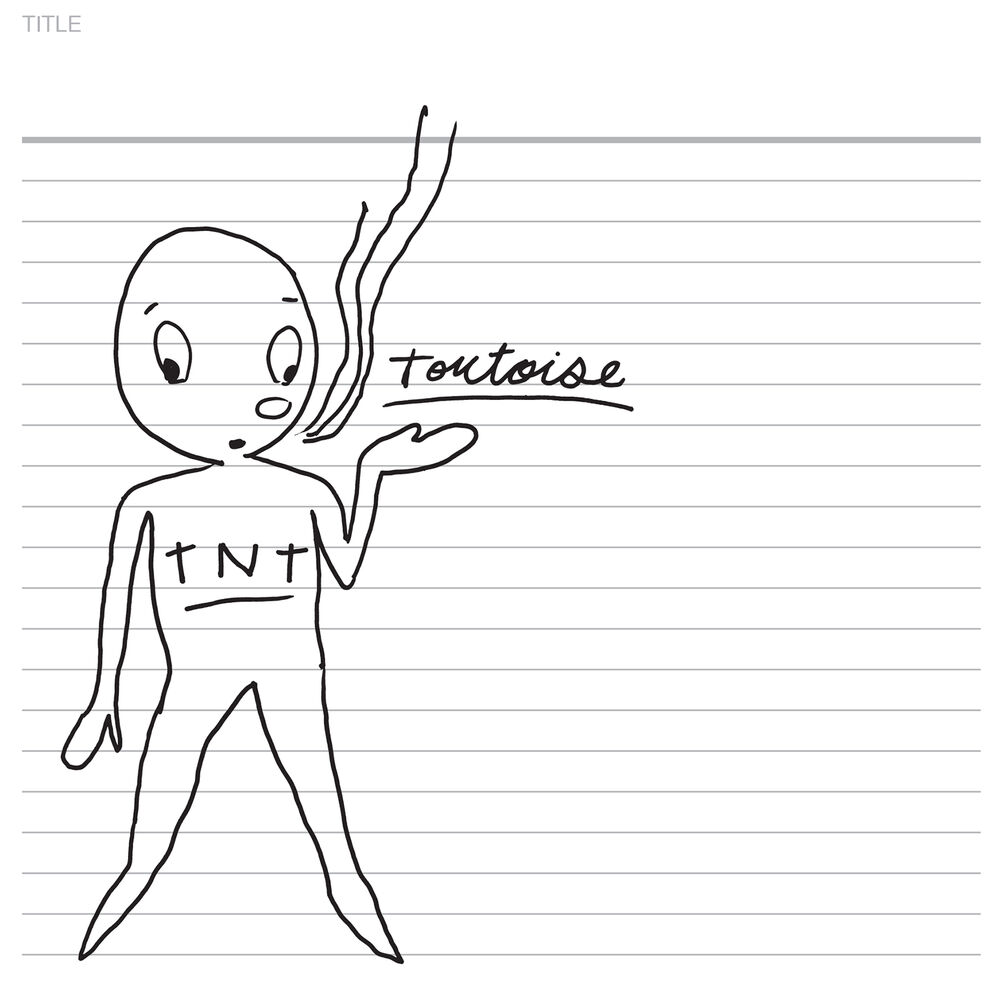
TNT is the third studio album by American post-rock band Tortoise, released in 1998 by Thrill Jockey. After Jeff Parker joined the band in 1996, Tortoise recorded TNT over the course of a year with drummer John McEntire acting as producer, editor and mixing. Taking influence from their remix material of the 1990s, the band recorded the album using hard disk technology in a "forward-then-back" approach, with members individually adding parts to tracks at different stages until the tracks were completed. As with previous albums, the band members also shared instrumental roles.
Largely jettisoning the dub and electronic leanings of their previous work, TNT steered the band in a new, more organic direction with a heavier influence taken from jazz, groove, and minimal music. The influence of electronic music remains on the album, however, alongside other styles such as funk, ambient and the band's ongoing krautrock influence. The album was critically acclaimed upon its release, with reviewers praising its postmodern sound; in the years since, it has come to be regarded as a classic of the post-rock genre and has been named as one of the best albums of the 1990s. The band toured in promotion of the album in 1998, bringing new, live arrangements to the previously studio-crafted songs.
Background
Tortoise's critically acclaimed second album Millions Now Living Will Never Die (1996) established the band as a defining, largely-instrumental post-rock band, and placed high underground anticipation on TNT. Shortly before recording TNT, the band "linked themselves with the cream of European electronica" to "remix the album on a series of 12" singles." Through these releases, it was apparent the band's "reliance on studio engineering" was growing.
In late 1996, shortly before work commenced on TNT, Jeff Parker, who had played in several jazz ensembles, joined the band as a second guitarist to play alongside David Pajo, who had been in the band for several years. John Bush of AllMusic stated that the addition of Parker cemented Tortoise's "musicianship as well as their connections to Chicago's fertile jazz/avant-garde scene."
Writing and production
TNT was recorded from November 1996 – November 1997 and produced, edited and mixed by the band's drummer John McEntire at his Soma Electronic Music Studios in the band's native Chicago, except for "Ten-Day Interval" and "Four-Day Interval", which the band recorded in another Chicago studio, Idful Music.
TNT was "pieced together in the studio"; inspired by their recent remixing endeavors, Tortoise "sought to work the remixing aesthetic into the recording process, which utilized nonlinear hard-disc studio technology." McEntire explained "I think that there was a tendency to not want to do the sort of remix frenzy that we've been known for in the past, because it's becoming a sort of a cliche. I think those ideas are still extremely valid, but it's just become this sort of marketing tool, rather than a creative endeavor. We left the material really open.
Release and promotion
Media interest in TNT was relatively high prior to its release; American publications such as Billboard and British publications such as The Sunday Times, The Wire and The Face ran features on the band and the album. The band's labels and distributors had relatively high commercial hopes for the album; Alternative Distribution Alliance, who distribute the band's American record label Thrill Jockey to major chains, set up programs to promote and deliver TNT in outlets such as Best Buy, Borders, Tower Records and Barnes & Noble. Interest for the band had also grown in France; Betti Richards, Thrill Jockey's owner, said "France's market has always been a bit slow, but this time it seems like its going to blow up".
TNT was released by Thrill Jockey on March 10, 1998. In the United Kingdom, the album was released by City Slang, whereas in Japan, where the album was expected to sell 15,000 copies and carried a bonus remix of the title track by Nobukazu Takemura, it was released by Tokuma Japan Communications.
Critical reception
Critical reaction to TNT was positive. Chicago Tribune critic Greg Kot found that despite eschewing "vocals, narrative or conventional pop-song structure... the subtle logic of these compositions is revealed as tiny melodies surface and return, and the textures fan out as though part of a slow-motion sonic kaleidoscope". Chiedo Nkwocha of Vibe said, "rising above the current stale state of instrumental rock, TNT explodes." Brent DiCrescenzo of Pitchfork considered TNT "one of the top LPs of 1998 so far", as did The Independent's Angela Lewis, who praised it as "brain food, utterly lacking in cynicism". Rolling Stone's Ben Ratliff concluded that "TNT meanders, but it's a meandering expertly defined by the editing razor." Andrea Moed of CMJ was favorable, saying "TNT contains more musical ideas than either rock or electronica has yielded in several years. What's more, a decent percentage of them are good ones." James Sullivan of the Houston Chronicle compared the music to "a soundtrack without a movie; if you're sitting peacefully, any window will do".