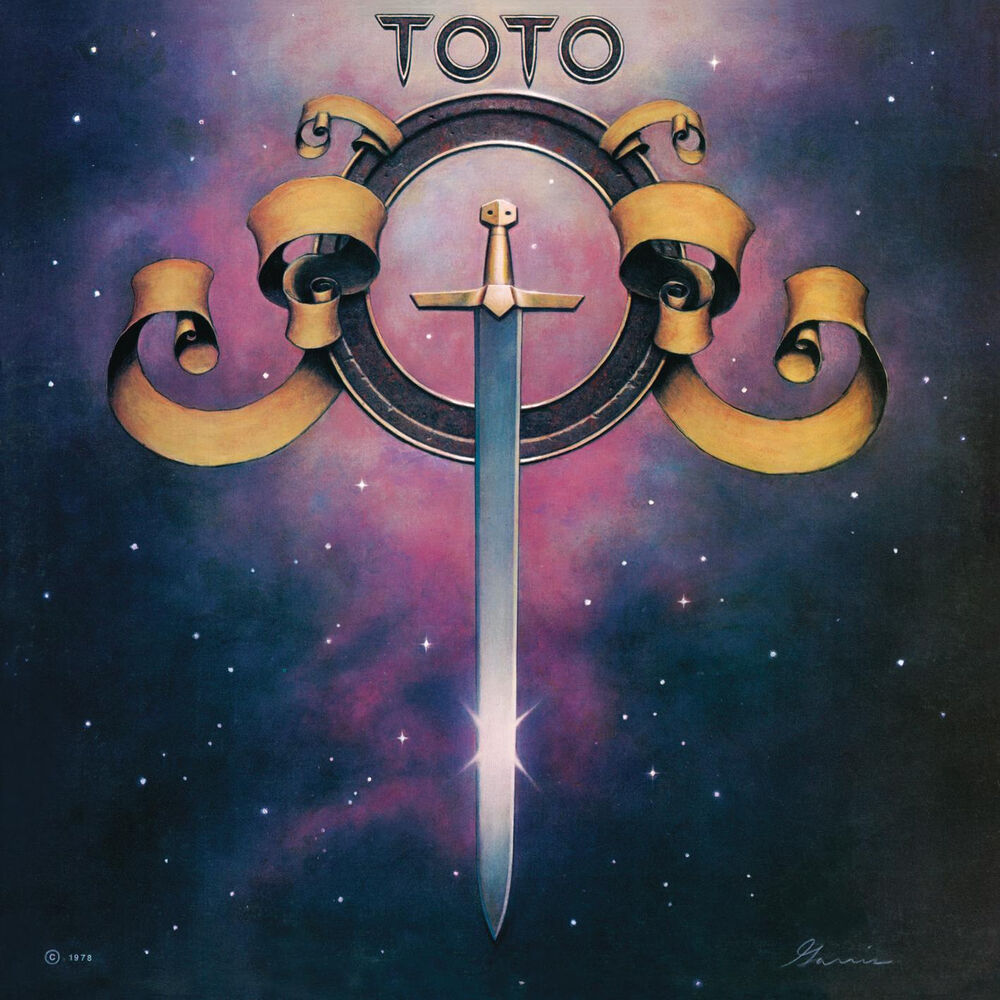
Toto
- Released10 October 1978
- UK peak No. 37
- Weeks on UK chart 5
- Entered UK chart 25 March 1979
- LabelColumbia
- Tracks10 · 41 min
3 tracks from it charted as singles. Press a flag to play it in the chart where it peaked.
Tracks
| 1 | Child's Anthem | 2:45 | |
| 2 | I'll Supply the Love No. 45 · 1979 | 3:45 | |
| 3 | Georgy Porgy No. 48 · 1979 | 4:08 | |
| 4 | Manuela Run | 3:55 | |
| 5 | You Are the Flower | 4:17 | |
| 6 | Girl Goodbye | 6:14 | |
| 7 | Takin' It Back | 3:46 | |
| 8 | Rockmaker | 3:19 | |
| 9 | 3:56 | ||
| 10 | Angela | 4:44 |
About the album
Toto IV is the fourth studio album by American rock band Toto, released on March 29, 1982, by Columbia Records. The album's lead single, "Rosanna", peaked at number 2 for five weeks on the Billboard Hot 100 charts, while the album's third single, "Africa", topping the Hot 100 chart, became the group's first and only number 1 hit. Both songs were hits in the UK as well, reaching number 12 and 3, respectively. The fourth single, "I Won't Hold You Back", also peaked within the top ten on the Hot 100, at number 10 and atop the Billboard Adult Contemporary charts for three weeks. It also went into the top 40 in the UK. With the success of "Africa", the album climbed back into the top 10 in early 1983 on both sides of the Atlantic.
Toto IV received six Grammy Awards in 1983 including Album of the Year, Producer of the Year for the band, and Record of the Year for "Rosanna". It reached number four on the Billboard 200 album charts in the United States, shortly after its release. It also reached the top ten in other countries, including Canada, Australia, New Zealand, the Netherlands, Italy, Norway, the United Kingdom, and Japan.
Background
After the success of their self-titled debut, Toto struggled to sustain success on their next two albums, Hydra and Turn Back. The band was under heavy pressure from Columbia Records to deliver a hit album with their next release or be at risk of being dropped from the label.
The band went back to the formula that helped them succeed on their first album, having an album that touched on many different genres of music. They also utilized many outside musicians to help give the sound a more polished, fuller feel than they had on past albums.
This was the final album with the original Toto lineup, as bassist David Hungate, who moved to Nashville during the recording of the album, left the band to spend more time with his family: Jeff and Steve Porcaro's brother Mike, who played cello on "Good for You", would soon replace Hungate as the band's new official bassist.
Production
Recording took place across several months in 1981 and 1982, and the band was allowed a much larger than average recording budget. At a time when most bands were using a single 24-track recorder, Toto used as many as three separate 24-track recorders simultaneously.
The multiple 24-track recorders were linked via a computerized SMPTE timecode system. One track of each machine contained the timecode synchronization signal, while 22 of the remaining 23 tracks of each reel were available for audio track recordings. (Typically, on analog 24-track recorders SMPTE was recorded on track 24, and the track next to it left blank to avoid any cross-talk or bleed over from the time code.) A significant number of tracks were copied and mixed down from those already recorded on another synchronized tape reel. This process lowered the amount of wear on the first generation tapes and helped maintain high quality sound during the extensive overdubbing and mixing process.