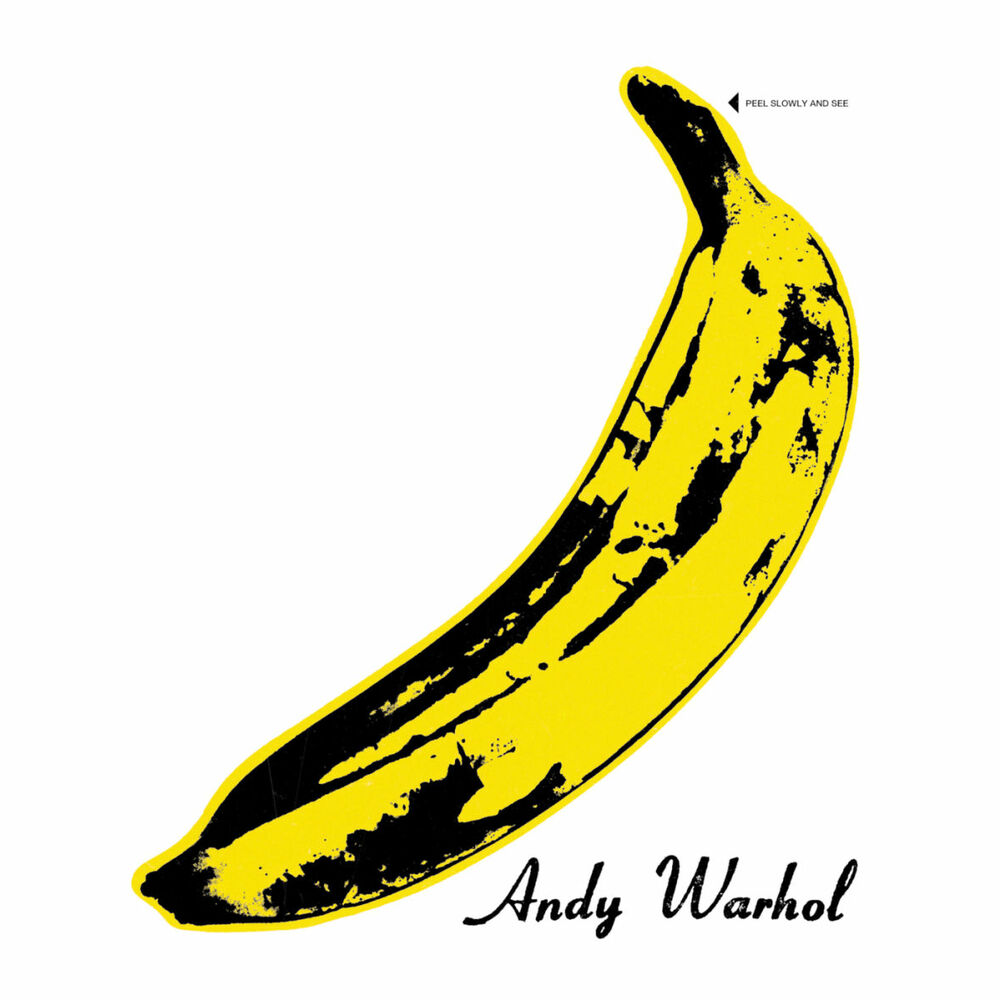
The Velvet Underground & Nico 45th Anniversary
- Released29 October 2012
- UK peak No. 43
- Weeks on UK chart 2
- Entered UK chart 3 November 2013
- LabelPolydor
- Tracks11 · 49 min
One track from it charted as a single. Press a flag to play it in the chart where it peaked.
Tracks
| 1 | Sunday Morning | 2:53 | |
| 2 | I'm Waiting For The Man | 4:37 | |
| 3 | Femme Fatale | 2:39 | |
| 4 | Venus In Furs No. 71 · 1994 | 5:10 | |
| 5 | Run Run Run | 4:20 | |
| 6 | All Tomorrow's Parties | 5:55 | |
| 7 | Heroin | 7:13 | |
| 8 | There She Goes Again | 2:38 | |
| 9 | I'll Be Your Mirror | 2:11 | |
| 10 | The Black Angel's Death Song | 3:10 | |
| 11 | European Son | 7:47 |
About the album
The Velvet Underground is the third studio album by the American rock band the Velvet Underground. Released in March 1969 by MGM Records, it was their first record with multi-instrumentalist Doug Yule, who replaced previous member John Cale. Recorded in 1968 at TTG Studios in Los Angeles, California, the album's sound—consisting largely of ballads and straightforward rock songs—marked a notable shift in style from the band's previous recordings. Lead vocalist Lou Reed intentionally did this as a result of their abrasive previous studio album White Light/White Heat (1968). Reed wanted other band members to sing on the album; Yule contributed lead vocals to the opening track "Candy Says" and the closing track "After Hours" is sung by drummer Maureen Tucker.
Thematically, The Velvet Underground discusses love, contrasting previous releases from the band. Reed devised its track order and based his songwriting upon relationships and religion. "Pale Blue Eyes" has been hailed as one of his best love songs, although "The Murder Mystery" is noted for its experimentation in a call-back to White Light/White Heat. Billy Name took the album's photograph of the band sitting on a couch at Andy Warhol's Factory.
Background
Cale was fired from the group in September 1968, and Yule was brought in as a bassist. Yule was discovered by Morrison through the band's road manager Hans Onsager. Weeks after Yule joined the Velvet Underground, they began recording their third studio album. Lou Reed, the band's principal songwriter, believed that the band should not "make another White Light/White Heat. I thought it would be a terrible mistake, and I really believed that. I thought we had to demonstrate the other side of us. Otherwise, we would become this one-dimensional thing, and that had to be avoided at all costs."
According to Morrison, a majority of the band's equipment got stolen at JFK International Airport earlier in 1968, which influenced the album's sound. However, Yule rejects this claim, explaining that he has no recollection of such an event and clarifying that the band was simply playing more melodically—Tucker has corroborated this.
Recording
The Velvet Underground was recorded during November and through December 1968 at TTG Studios in Los Angeles. The band stayed at the hotel Chateau Marmont and toured frequently while recording. They wrote and rehearsed at the hotel in the afternoon, recording songs at night. Reed and Morrison played 12-string guitars from Fender. Morale in the studio was generally high—Yule said that recording the album "was a lot of fun. The sessions were constructive and happy and creative, everybody was working together". According to Yule, it took "a couple of weeks for the basic tracks", additionally describing it as a "studio live album". Reed intentionally tried to get Yule in the spotlight of it, and the band members suspected that this might have inflated his ego.
Music and lyrics
The restraint and subtlety of the album was a significant departure from the direct abrasiveness of White Light/White Heat. It reduced their previous effort's explicit sexual references, horror, and references to drugs, replacing those with discussions of religion, love, and loneliness. Music critic Greg Kot of the Chicago Tribune characterized it as folk rock, and Rolling Stone magazine's Troy Carpenter said that it focused on mellow, melodic rock. According to music journalist Steve Taylor, The Velvet Underground is a pop album because of its more accessible songs and "has been called Lou Reed with a backing band due to the emphasis placed on songs rather than experimental sound work." Biographer Richie Unterberger commented on its dramatic shift in sound: "Having made perhaps the loudest album of all time, it's almost as if they've now decided to make the world's quietest LP." Reed said that all of the songs on the album were in order and complement each other, elaborating in an interview with Howard Smith:
There were certain questions stated in the opening song ...
Release
The release date of the band's "third album" was given in a November 1968 article in Los Angeles Free Press as January 1969; the full album was previewed by Danish magazine Superlove in January 1969. Phil Morris of MGM told Record World on February 22, 1969, that the album was ready for release. When the album was released in March 1969, the songwriting credits listed the entire band as its composer, even though Reed wrote all of its songs. Later releases would instead label Reed as the sole composer. The band switched from Verve Records to parent label MGM for unknown reasons—Sesnick says that the rock division of Verve was close to closing, while Morrison says that this simply was "an administrative change". Ultimately, the decision to move to MGM was Sesnick's.
Two mixes of the album were released. The initial mix is Reed's which boosts his vocals and lowers its instruments, which was the first mix sold in the United States. Morrison noted that it sounds like it was recorded in a closet, which led to its label as the "closet mix".
Critical reception
Unterberger noted how The Velvet Underground sounded far more commercial than any of the band's previous albums and labeled it as the point where critical reception of the band became more positive. Despite this, however, the album failed to chart, and was less successful than the group's previous two. Reviewing the album for The Village Voice in 1969, Robert Christgau viewed it as the band's best work and found it tuneful, well written, and exceptionally sung, despite "another bummer experiment" in "The Murder Mystery" and some "mystery" regarding the mix. In his ballot for Jazz & Pop magazine's annual critics poll, Christgau ranked it as the sixth best album of the year.
Reissues
Along with the group's first three albums, The Velvet Underground received a reissue in 1985. These reissues were unexpectedly successful, which led to further releases under PolyGram such as Another View. The album was included in the box set Peel Slowly and See, and would later be reissued as a Super Deluxe edition for its 45th anniversary, including mono versions of tracks, demos, and live performances.