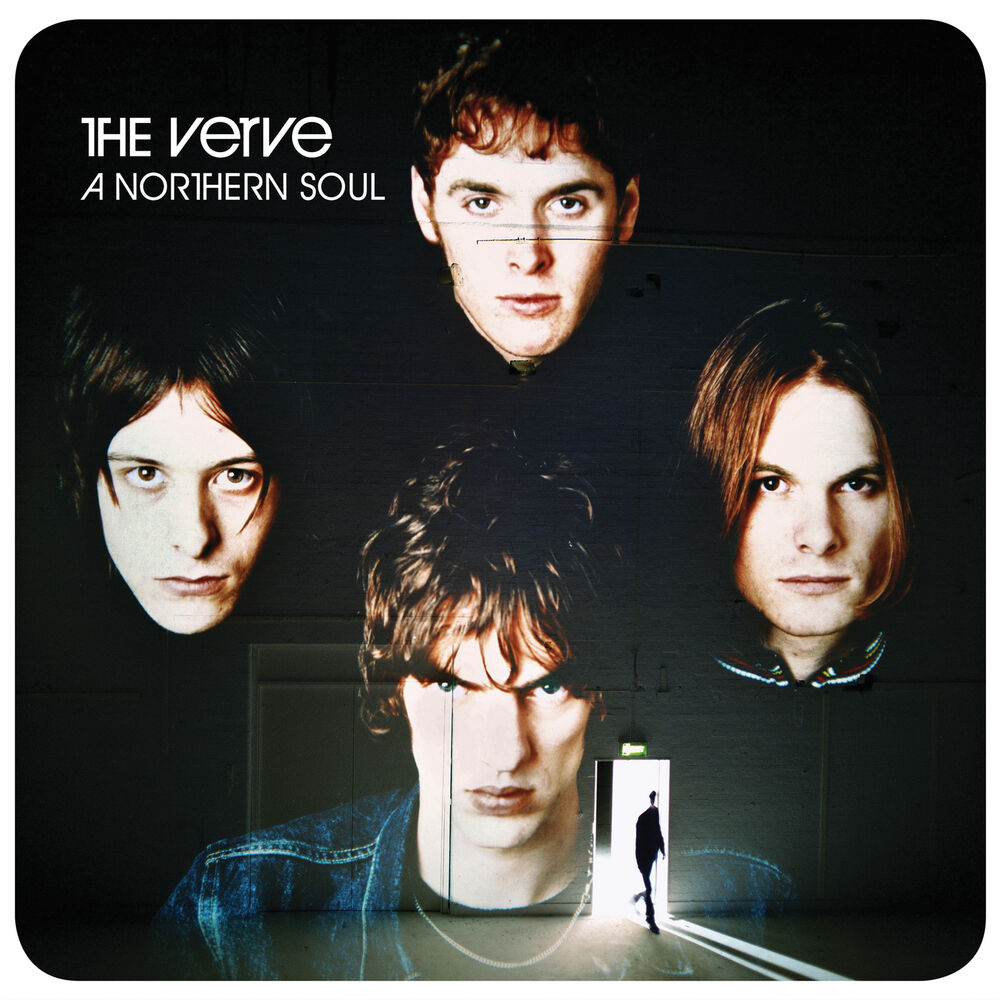
A Northern Soul
- Released9 September 2016
- UK peak No. 13
- Weeks on UK chart 18
- Entered UK chart 9 July 1995
- LabelUMC (Universal Music Catalogue)
- Tracks12 · 65 min
3 tracks from it charted as singles. Press a flag to play it in the chart where it peaked.
Tracks
| 1 | A New Decade (Remastered 2016) | 4:13 | |
| 2 | This Is Music (Remastered 2016) No. 35 · 1995 | 3:39 | |
| 3 | On Your Own (Remastered 2016) No. 28 · 1995 | 3:36 | |
| 4 | So It Goes (Remastered 2016) | 6:14 | |
| 5 | A Northern Soul (Remastered 2016) | 6:35 | |
| 6 | Brainstorm Interlude (Remastered 2016) | 5:15 | |
| 7 | Drive You Home (Remastered 2016) | 6:46 | |
| 8 | History (Remastered 2016) No. 24 · 1995 | 5:29 | |
| 9 | No Knock On My Door (Remastered 2016) | 5:11 | |
| 10 | Life's An Ocean (Remastered 2016) | 5:41 | |
| 11 | Stormy Clouds (Remastered 2016) | 5:39 | |
| 12 | (Reprise) (Remastered 2016) | 6:14 |
About the album
A Northern Soul is the second studio album by English rock band the Verve, released on 3 July 1995 through Hut Records. With the tumultuous promotion for their debut studio album, A Storm in Heaven (1993), combined with their friends in Oasis becoming exceptionally popular, relationships between members of the Verve became strained. After connecting with Oasis producer Owen Morris, the Verve went to a rehearsal space in Wigan to write material for the next album, which they recorded at Loco Studios in Wales. The sessions gained notoriety for the stories that emerged from the time, including vocalist Richard Ashcroft going missing for five days and him allegedly totalling a car on the studio's lawn. In the first three weeks, they had finished 15 tracks; after this point, the situation soured as guitarist Nick McCabe grew exhausted from dealing with the other members frequently partying and taking ecstasy, in addition to Ashcroft and Morris shouting and destroying objects. At one point, McCabe began to have a different working schedule from the others, starting at 10–11 a.m. while the rest of the band started at 6 p.m.
Variously described as alternative rock, psychedelic rock, and psychedelic soul, Ashcroft said A Northern Soul revolved around one person experiencing various emotions.
Background
The Verve released their debut studio album, A Storm in Heaven, in June 1993 through the Virgin imprint Hut Records. Reaching number 27 in the UK Albums Chart, it entered a music scene dominated by grunge, sitting against the emergence of British bands Blur and Suede. Shortly afterwards, frontman Richard Ashcroft said he wanted to record the follow-up as soon as possible. In 1993, the band promoted the album with a UK tour, a European tour with the Smashing Pumpkins – by which point they were writing songs for their next album – a US tour with Acetone, and ending with a UK tour with Acetone and up-and-comers Oasis. The Verve's notoriety as troublemakers was exacerbated by connecting themselves with Oasis. In 1994, the Verve went on a Europe tour, trekked across the US as part of Lollapalooza, and played a series of European festivals, including Reading Festival. In the lead-up to Lollapalooza, the compilation No Come Down (1994) was issued as a stop-gap release.
Writing and Morris' involvement
Since the recording of their debut album, Ashcroft had some life-changing experiences that would fuel his songwriting. Towards the end of 1994, Ashcroft and his girlfriend Sarah Carpenter ended their six-year relationship when the latter became infatuated with one of the band's roadies, Andy Burke, who was also one of Ashcroft's best friends. As Ashcroft was dealing with this, Jones was also going through mental struggles. The latter found it difficult to acclimatise at home in Wigan after Lollapalooza and the US in general. McCabe was also breaking up with his pregnant girlfriend Monica; he was growing weary of others around him. Ashcroft fled to London and, subsequently, the countryside without informing anyone. Ashcroft attempted to reconcile with her in London over a period of three months. For two of those three, he was mentally and physically exhausted. When he reconvened with the rest of the band, they were performing the music that he felt conveyed the emotions he was experiencing, allowing the two aspects to go together with relative ease.
Recording
The initial idea for the recording sessions was to take recording gear to their rehearsal room, as they were the most productive there, and it had the right atmosphere. When they realised that it was impractical to use it for recording, they decided on Loco Studios in Wales. Philip Wilding, author of The Verve: Bitter Sweet (1998), wrote that the sessions for their second album became mythologised as a combination of "lurid stories and gruesome hearsay echoing in stories of drug-fuelled jam sessions that became extensive recording sessions and bouts of reckless violence." Baker conveyed a similar situation, while singling out co-manager John Best for describing the situation as lunatics running an asylum.
Title and music
Discussing the album, Ashcroft said the "doors have opened for me personally with my writing. We've been liberated. Touring, you get lost on a rock and roll adventure. You're on the Stardust trip. You're in the mansion in your head with the white robes on doing rock operas called 'Woman'. But then you come home and it's time to get twenty Regal and a pastie and assess who you are. That's why the new album's got more soul to it. It's modern Northern blues." Egan said a possibility for the album's title was how the Verve viewed their sound as the "result of a fundamental sincerity." musicOMH's Ben Hogwood suggested that the title was a confident declaration of their Wigan lineage, which he said was a noble proclamation, though "ultimately a doomed one." He added that it was taken from the 1960s Northern soul movement, where it focuses its "impact on the whole body and mind rather than just the feet, shaking it from the very core." Ashcroft said the album revolved around one person experiencing various emotions: "pretty painted, then elated, then arrogant.
Themes
On the album's lyrics, Ashcroft said that, as a whole, it was him "asking myself: 'Who the fuck am I?' Am I the guy in 'This Is Music' standing tall in the world with these huge guitars around him like the king of rock 'n' roll, or am I the guy in 'A Northern Soul' who's wasted and desperate, or am I the guy in 'On Your Own', who's in between life and death, or am I the guy in 'Life's an Ocean' imagining the future and buying feelings from a vending machine, am I this future shock guy? But I'm all of them, you see. It’s dangerous to fracture your personality too much, but that’s what it was." Egan noted that there were allusions to a "broken love affair", which prompted questions as Ashcroft's emotional turmoil was not public knowledge until mid-1995. During an interview with journalist Dave Simpson for Melody Maker, Ashcroft talked about the subject matter with Jones, which nearly resulted in a heated argument between the members.